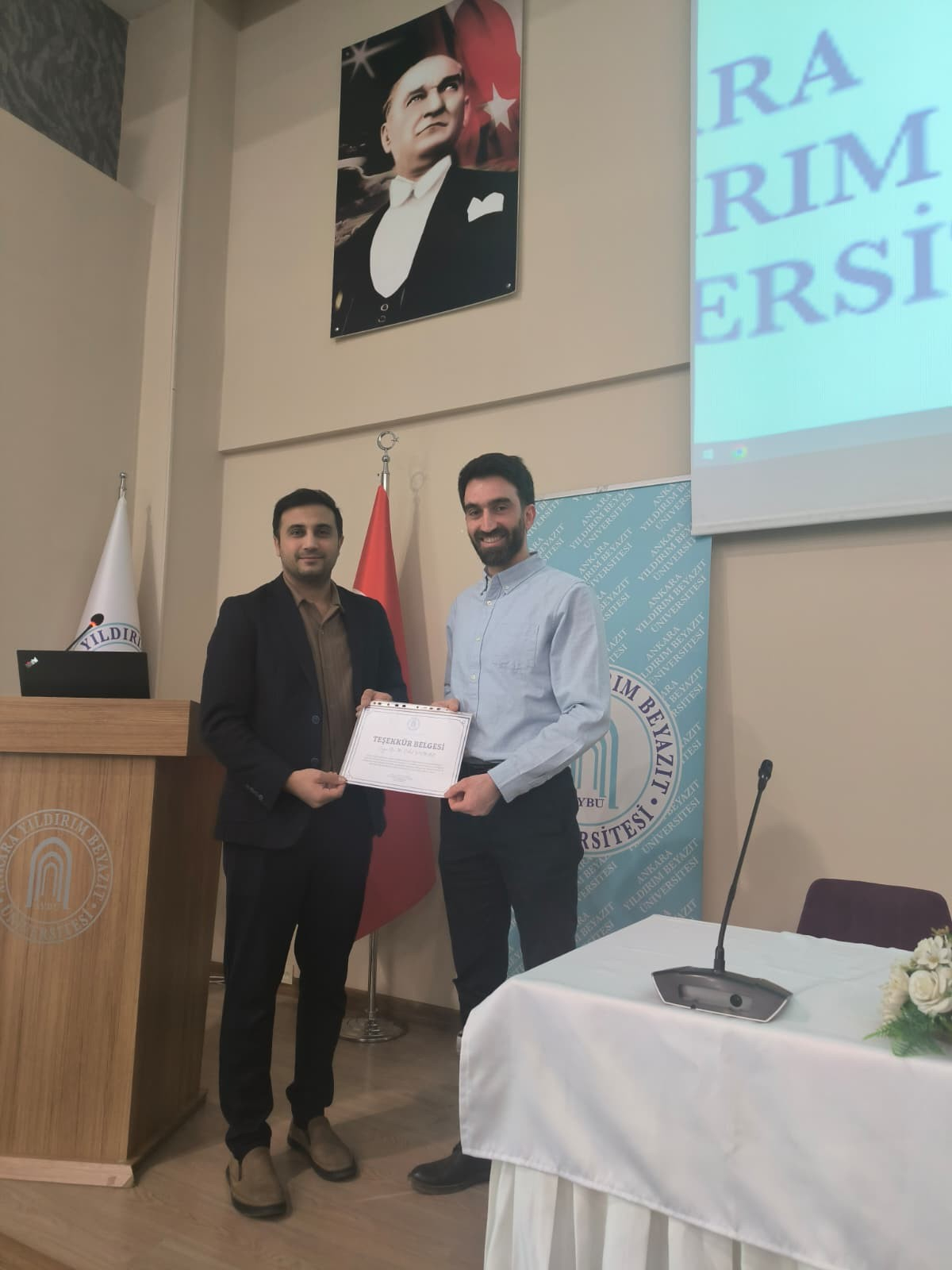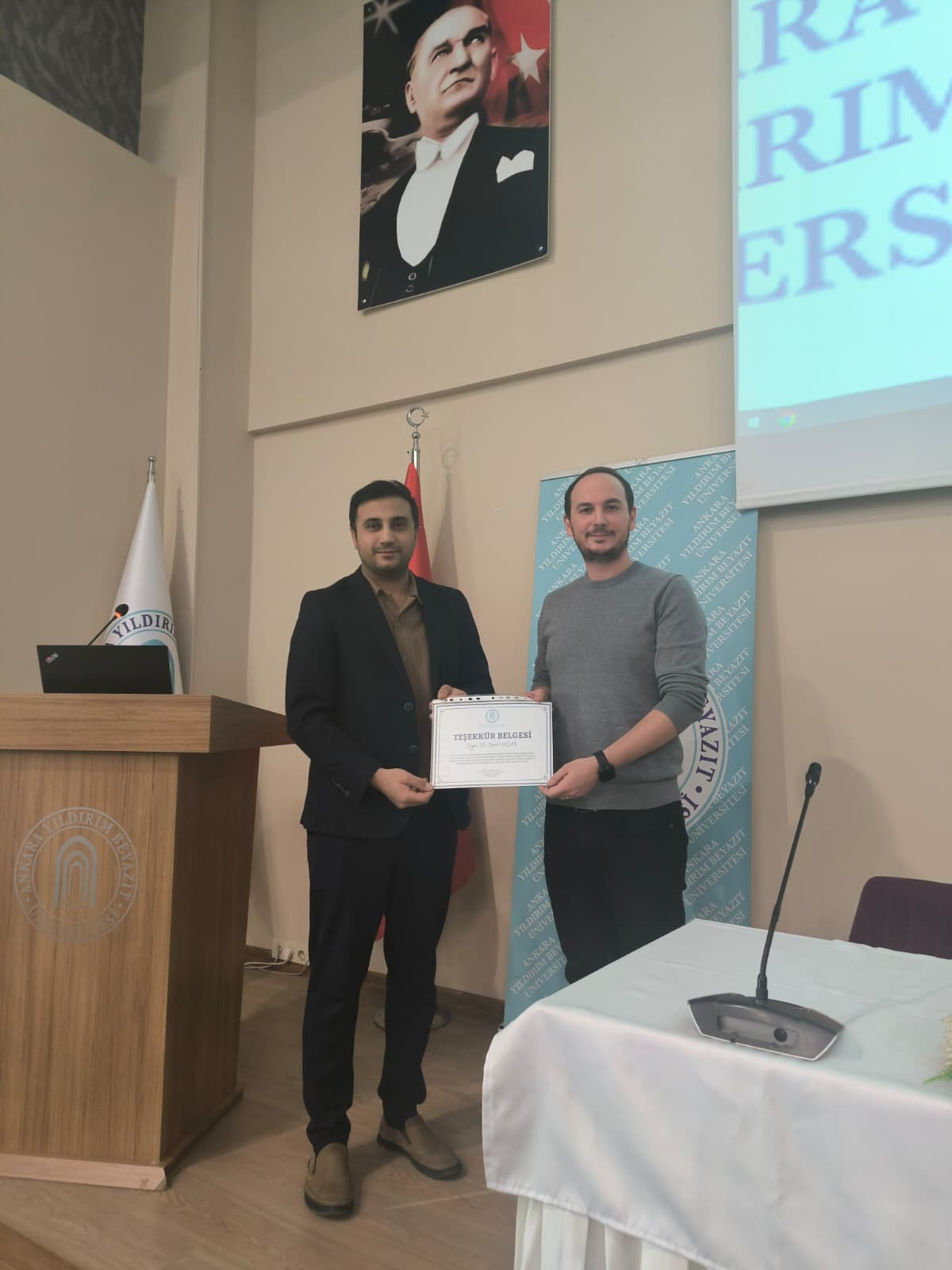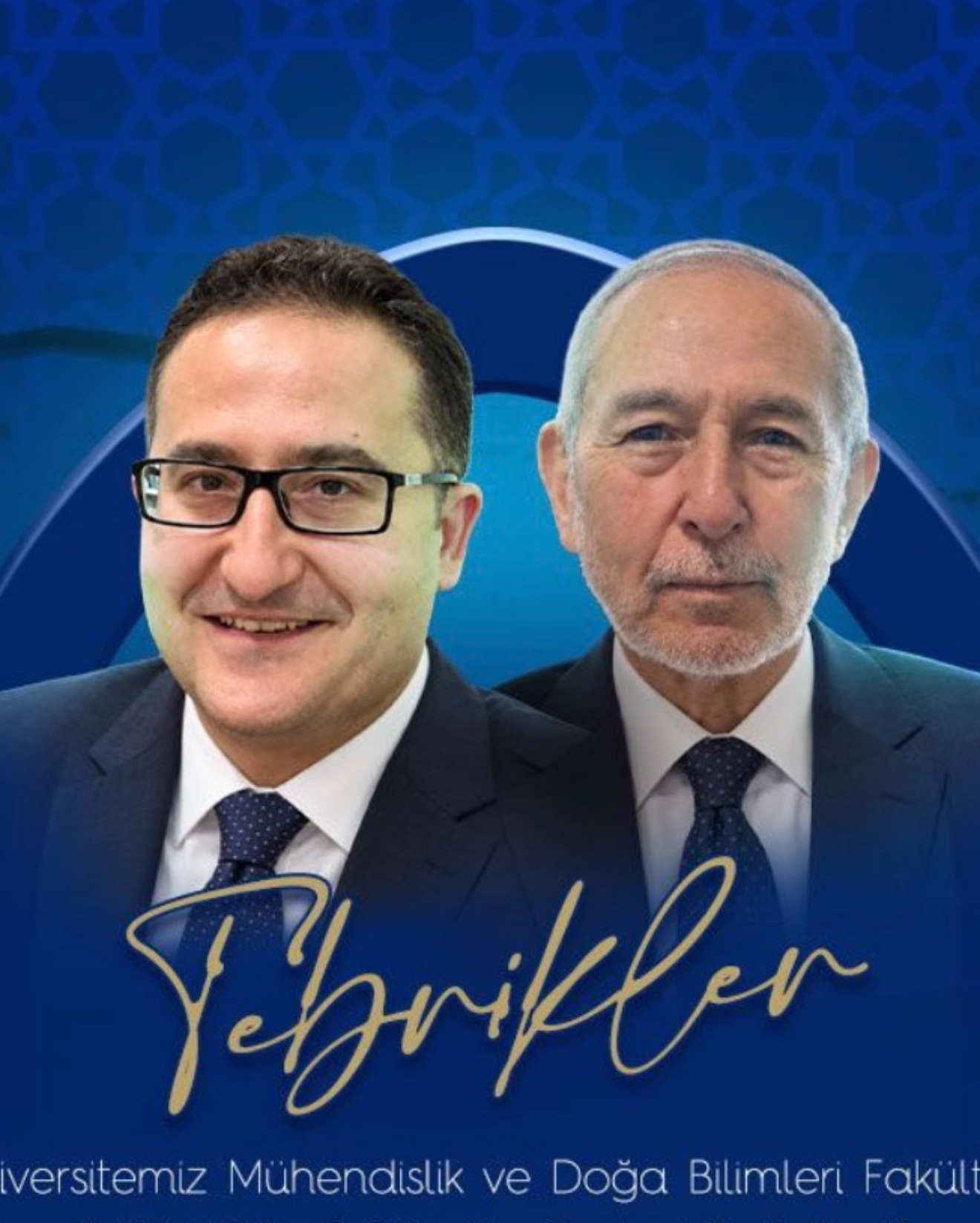

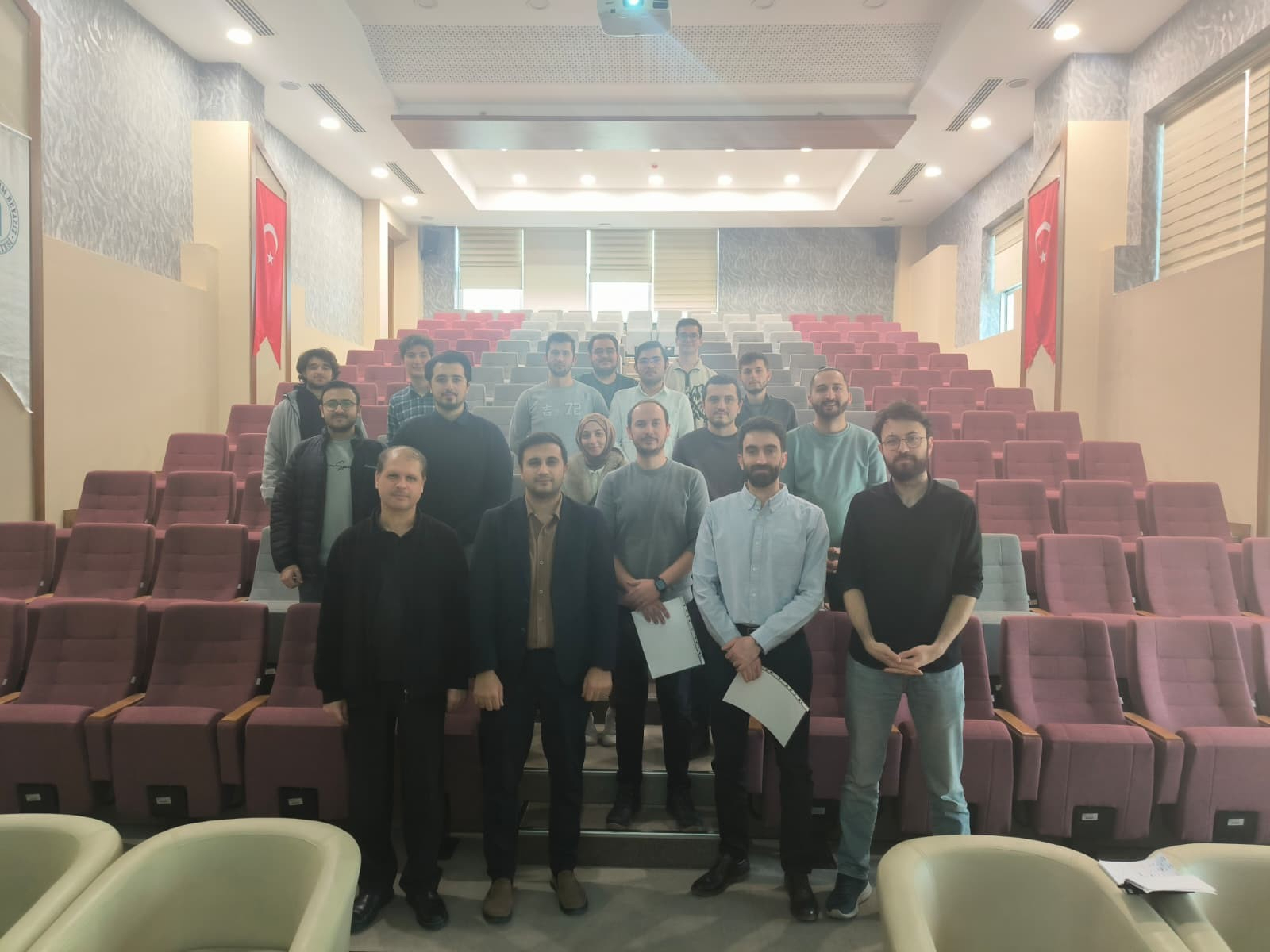
A seminar was held at Ankara Yıldırım Beyazıt University in which faculty members of our department shared their international research experiences. At the event organized on March 11, 2026, Dr. M. Cihat Yılmaz and Dr. Necati Uçak presented their experiences and research activities carried out in the United States.
During the seminar, the speakers discussed their experiences working in an international research environment, scientific collaborations conducted with different research groups, and their observations on academic research culture. They also provided evaluations regarding graduate and postdoctoral research processes.
Dr. Necati Uçak introduced the studies he conducted within the scope of the project titled “Workforce Training for Metrology using Immersive Technologies,” carried out at the University of North Carolina at Charlotte – Center for Precision Metrology. The project utilizes Extended Reality (XR) technologies to improve the understanding and application of Geometric Dimensioning and Tolerancing (GD&T) concepts. Within the project, Immersive Digital Twin (IDT)-based training environments are being developed to simulate GD&T concepts in virtual and mixed reality environments. Through a WebGL-based platform accessible from various devices, the system aims to enhance students’ conceptual understanding and practical skills in engineering education. The project is supported within the scope of the industrial collaboration programs of the University of North Carolina at Charlotte.
Dr. M. Cihat Yılmaz shared information about the research conducted at the University of Illinois Urbana-Champaign under the supervision of Prof. Alexander Vakakis. These studies focus on investigating the vibroacoustic behavior of wing designs developed using a metamaterial approach inspired by biological structures. The mechanical performance of the designs is analyzed through numerical simulations and design optimization methods, while prototypes produced using additive manufacturing techniques are experimentally tested to evaluate the developed design approaches. The findings obtained from this research are expected to contribute to a deeper understanding of the vibroacoustic behavior of metamaterials and to the development of new design approaches that can be applied in various engineering applications.
The seminar concluded with a question-and-answer session, followed by expressions of appreciation to the speakers. The event contributed to increasing participants’ awareness of international research opportunities and academic career pathways.