



About the Department
With the rapid advancement of science and technology, industry increasingly requires higher-quality, high-performance products. Many tools and systems used in the past no longer fully meet today’s needs. The Department of Industrial Design at Ankara Yıldırım Beyazıt University offers an interdisciplinary education aimed at designing functional and innovative products in response to the current needs of industry.
In addition to functionality, the Department emphasizes the importance of user-friendly and aesthetic qualities in product design. Students therefore acquire knowledge and skills in areas such as design theory, user research, ergonomics, manufacturing techniques, and prototype development. By enabling students to gain both theoretical knowledge and practical experience, the educational process encourages innovative and interdisciplinary thinking.
Who Can Study Industrial Design?
“Despite all its changes, the universe is governed by order; despite all its details, it exists in harmony.”
Ibn al-Haytham
Certain qualities and abilities are important for students who wish to study in this field and pursue a successful career. Industrial design is the process of designing products used in everyday life so that they are functional, aesthetically pleasing, and user-friendly. Designers create innovative and practical products by considering user needs and market requirements. These products may be developed for the automotive, electronics, furniture, healthcare, sports, packaging, and many other sectors.
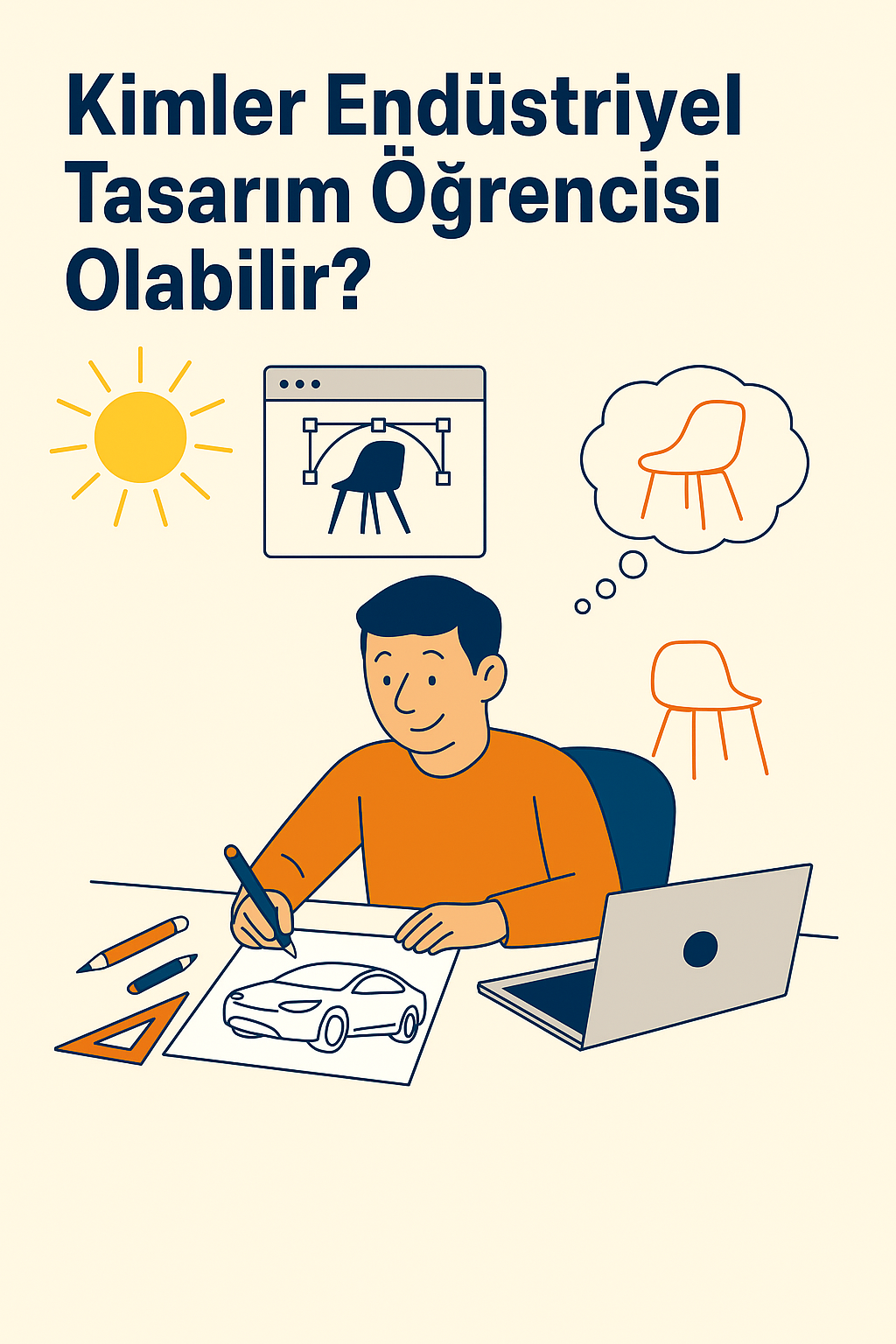
Drawing ability plays an important role in industrial design; however, it does not need to be perfect at the outset and can be developed over time. Basic drawing skills provide a major advantage in visualising and communicating ideas. Creativity, problem-solving ability, and technical knowledge are just as important as drawing skills. The ability to use computer-aided design (CAD) software and an understanding of prototype development processes are important competencies for students in this programme.
Students who perform well in mathematics, physics, chemistry, and design and technology courses at high school may have an advantage in industrial design education. These subjects strengthen analytical thinking and technical knowledge. Visual and spatial perception also plays an important part in succeeding in this programme. Visual perception and spatial thinking are essential when determining the aesthetic and functional qualities of products. Designers should be able to think in two and three dimensions to optimise product form and functionality.
“All people are designers. Almost everything we do, nearly all the time, is design, because design is fundamental to all human activity.”
Victor Papanek
Problem-solving ability is another critical skill. Industrial designers frequently need to analyse and resolve technical and aesthetic challenges encountered during the design process. Communication skills and teamwork are also essential for success in this field. Industrial designers generally collaborate with other designers, engineers, and marketing professionals on projects. The ability to communicate effectively and work well in a team is therefore among the qualities expected of a successful industrial design student.
Creative individuals with strong problem-solving skills, technical knowledge, and effective communication abilities have the potential to build successful careers in this field. Curiosity, a willingness to draw inspiration from a wide range of disciplines, and an investigative mindset are also highly important. Today, educating designers who embrace sustainability principles and demonstrate a strong ethical awareness contributes to the development of individuals who act responsibly towards both the environment and society. Industrial design students are therefore encouraged to embrace sustainable and ethical design approaches and become the responsible designers of the future.
Programme Structure
The Department of Industrial Design within the Faculty of Architecture and Fine Arts at Ankara Yıldırım Beyazıt University aims to educate creative, solution-oriented designers who closely follow technological developments and can integrate theoretical knowledge with practice.
The Department not only equips students with design skills but also provides comprehensive education in manufacturing processes and technologies. Through courses in subjects such as materials science, manufacturing techniques, and prototype development, students gain real-world experience through workshop activities and industry projects.
Classrooms, Workshops, and Laboratory Facilities
You can explore the Department’s practice-based learning environments and current classroom and laboratory plan on the relevant page.
Career Fields for Graduates
Automotive Industry:
- Vehicle Design: Exterior and interior design of cars, motorcycles, commercial vehicles, and other means of transport.
- Accessory Design: Design of in-vehicle accessories and complementary components.
Defence Industry:
- Military Equipment and Device Design: Design of ergonomic and functional military equipment for the defence industry.
- Military Vehicles and Systems: Interior and exterior design of military vehicles and systems.
Electronics and Technology:
- Consumer Electronics: Design of smartphones, tablets, computers, and other personal electronic devices.
- Home Appliances: User-friendly and innovative designs for major appliances, small household appliances, and electronic devices.
Furniture and Interior Product Design:
- Furniture Design: Design of ergonomic and aesthetically pleasing furniture for homes, offices, and commercial spaces.
- Interior Accessories: Design of decorative objects, lighting elements, and other interior products.
Medical and Healthcare:
- Medical Devices: Design of devices and equipment that facilitate patient care and medical treatment.
- Healthcare Products: Development of products for consumer health and hygiene.
Transportation and Mobility:
- Transportation Vehicles: Design of public transportation vehicles such as trains, buses, aircraft, and ships.
- Urban Furniture: Design of public-space equipment such as transit shelters, kiosks, and similar elements that support urban mobility.
Sports and Recreation:
- Sports Equipment: Design of sporting goods, fitness equipment, and play equipment.
- Entertainment Products: Development of toys, game consoles, and other entertainment products.
Packaging and Graphic Design:
- Packaging Design: Design of packaging that protects products and supports their marketing.
- Brand Identity and Graphic Design: Product-related graphic design and brand identity development processes.
R&D and Innovation:
- Research and Development: Developing innovative solutions to design new products and improve existing ones
UI/UX Design:
- User Interface (UI) Design: Designing interfaces for digital products and developing user-friendly, aesthetically engaging design solutions.
- User Experience (UX) Research: Conducting research and analysis to improve the user experience and developing innovative approaches to interaction design.
Gaming and Digital Entertainment Industry:
- Game Design: Conceptual design of video and mobile games, including character and environment design.
- Game Development: Developing technical and aesthetic solutions for game development processes and improving the user experience. Industrial designers add value in these fields through their creative problem-solving skills and technical knowledge, collaborating across disciplines to produce user-centred solutions. This broad range of fields provides graduates with career opportunities across diverse sectors.
Academic Staff
You can explore the Department’s academic staff, their roles, and fields of study.
Admission Rankings and Quotas by Year
| Year | Lowest Admission Rank | Quota |
|---|---|---|
| 2025 | 156.602 | 20 |
| 2024 | 168.054 | 20 |
For current admission data, programme requirements, and quota information, please visit the YÖK Atlas page.
Ankara Yıldırım Beyazıt University Department of Industrial Design Promotional Video
For detailed information about the University and campus facilities, please visit AYBU’s Prospective Students page.
AYBU Prospective Students Page