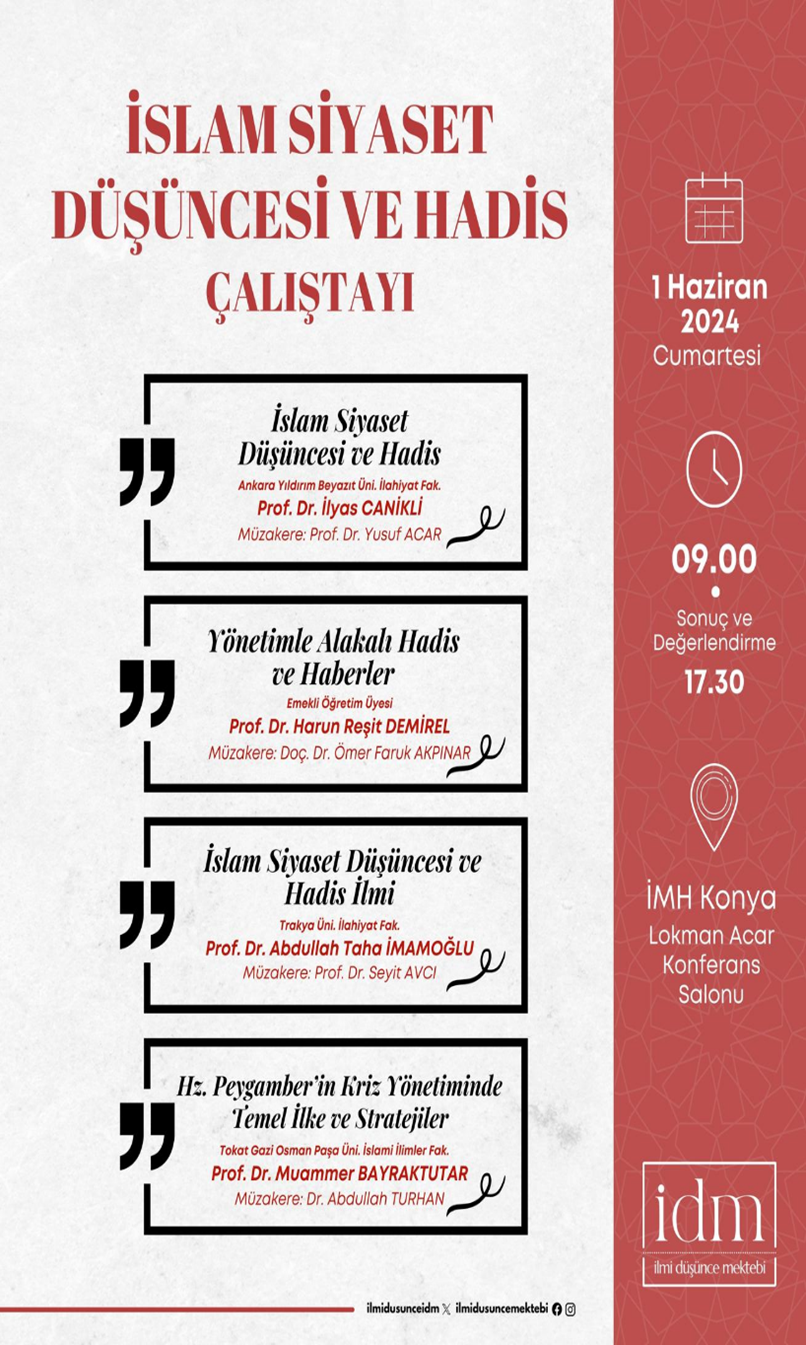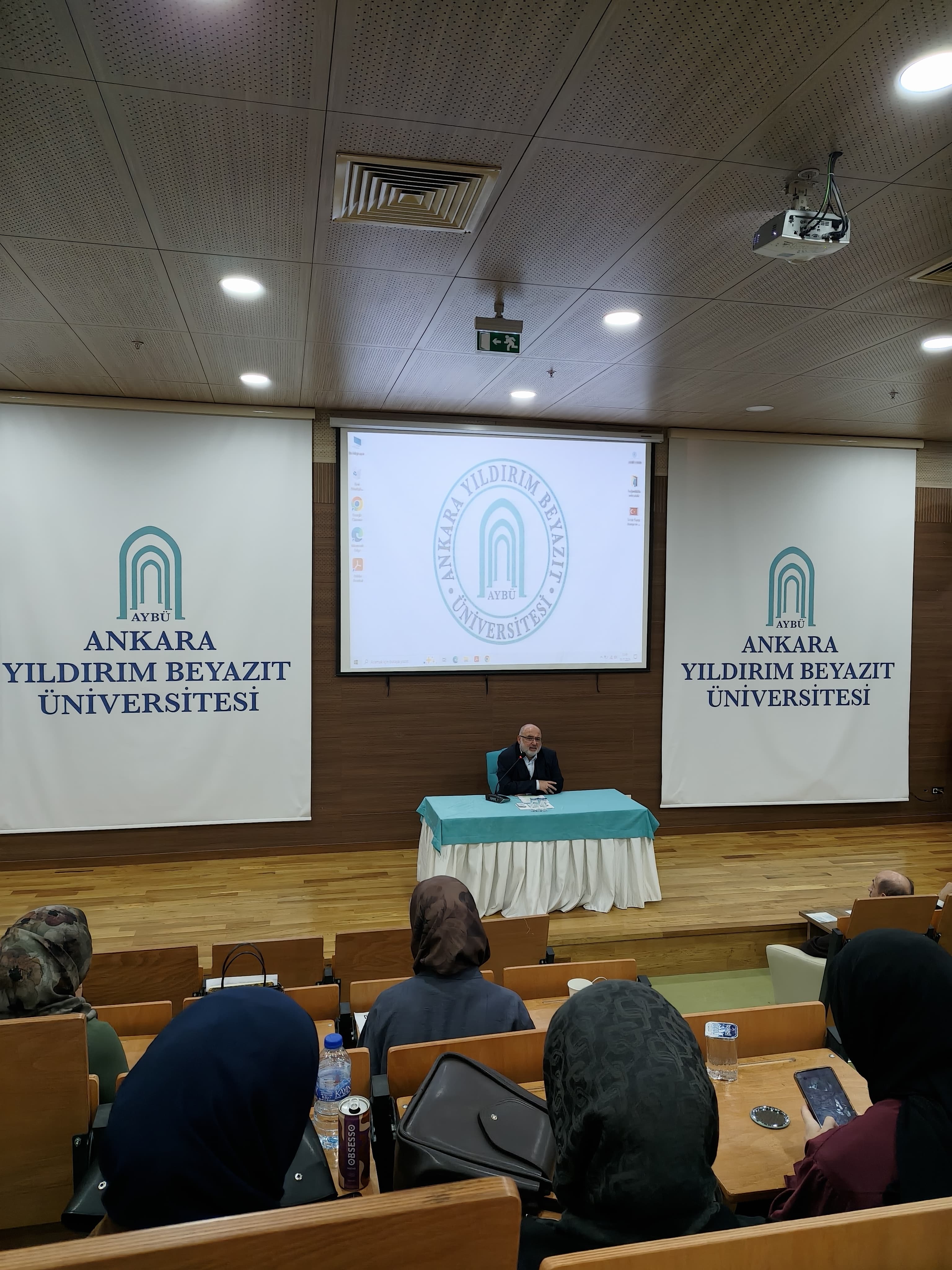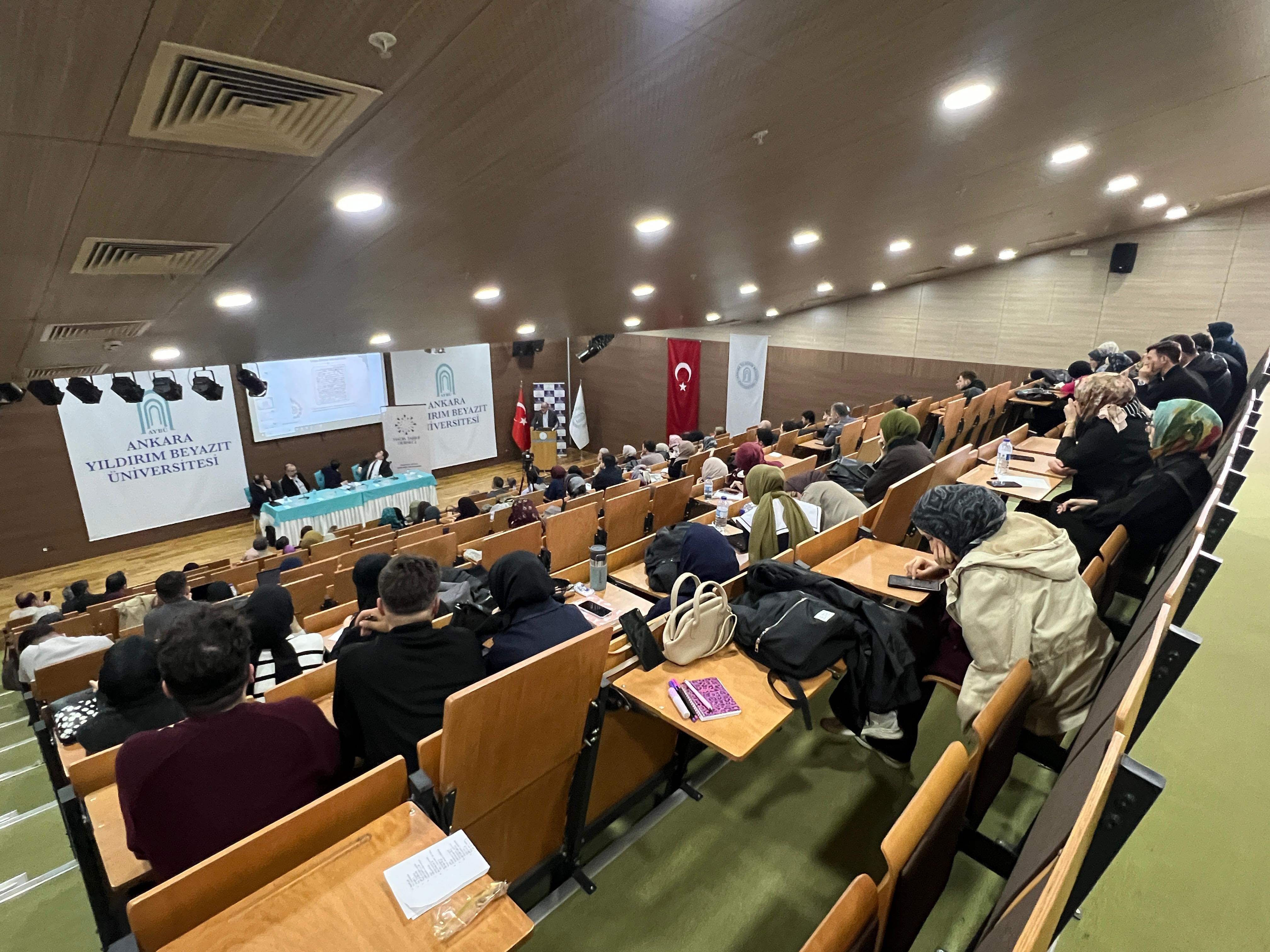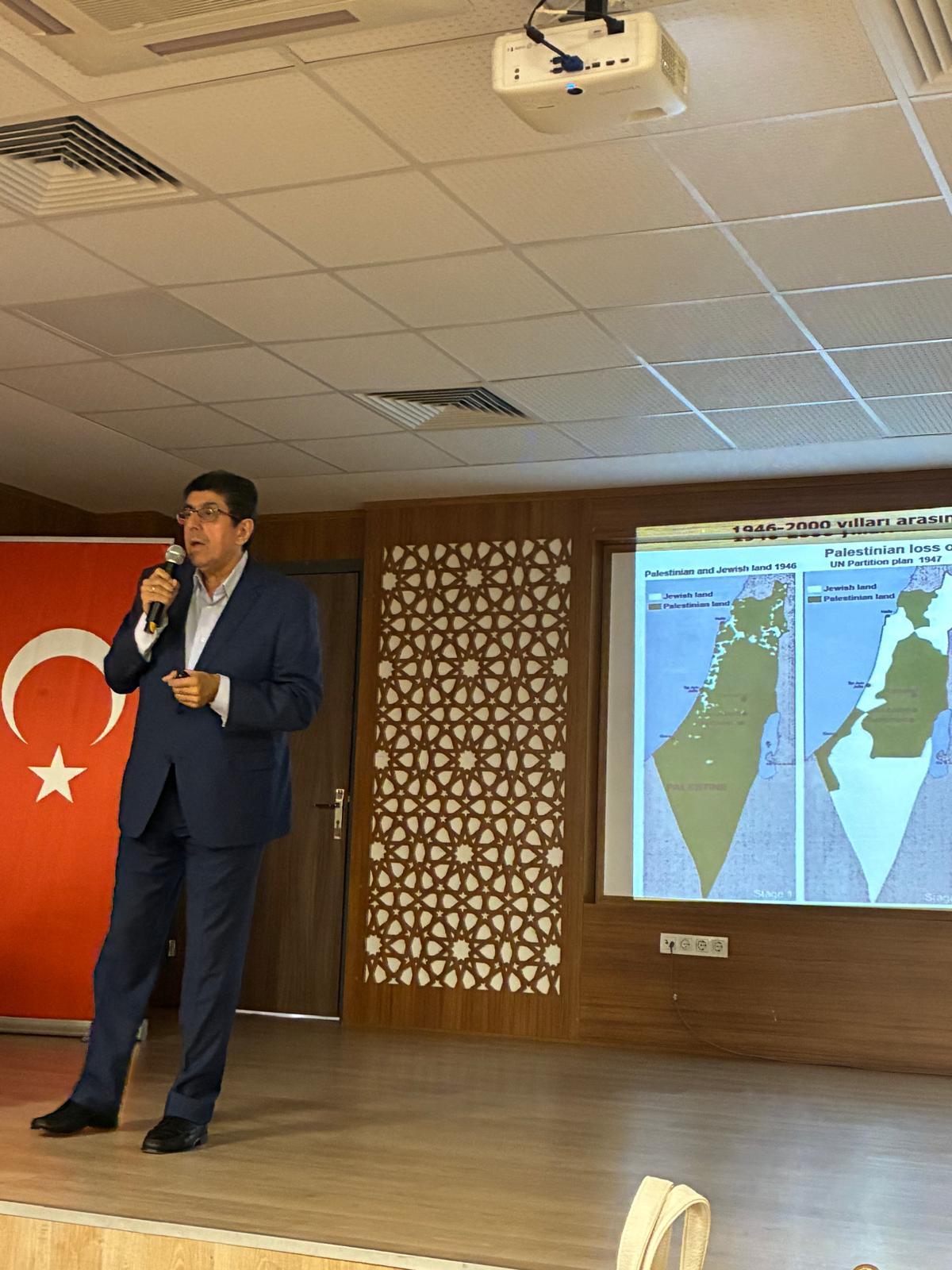


Prof. Dr. İlyas Canikli, Faculty Member at the Department of Basic Islamic Sciences, Division of Hadith, was invited to the Workshop on Islamic Political Thought and Hadith held by the Konya ‘İlmî Düşünce Mektebi’ on June 1, 2024, and presented a paper titled “Islamic Political Thought and Hadith”. In his paper, Canikli highlighted the following key points in summary: The principles set forth by the Qur'an in the political sphere—such as justice, consultation, competence, and referring matters of dispute to Allah and His Messenger—along with the Prophet's twenty-three years of political practice, are indispensable elements that must always be taken into consideration by those striving in this field and wishing to put forth an idea. However, it is well known that individuals/Muslims who claimed to act on the basis of the Qur'an and authentic Sunnah in the political arena across various periods have not always set good examples. It must also be recognized that these timeless concepts, such as justice, consultation, and entrusting duties to the competent, have generally failed to evolve intellectually and institutionally beyond being subjects of mutual preaching and advice. To offer a self-criticism, although it is disheartening, it remains an undeniable fact that fundamental principles such as justice, consultation, and competence have been emptied of their meaning and wasted within individual, social, and administrative units in the contemporary Islamic world, and that religion is being exploited in this area just as it is in others.
It must be stated that it is possible to overcome problems in the fields of governance and politics by utilizing collective intelligence, taking into account the fundamental principles established by the Qur'an, primarily the authentic Sunnah of the Messenger of Allah, and in addition to all these, the cumulative experience of humanity. Just as life is dynamic, considering that religion and religious matters are also dynamic, acting according to universal rather than local Islamic principles will perhaps mean rethinking and rediscovering the religion to which we belong.