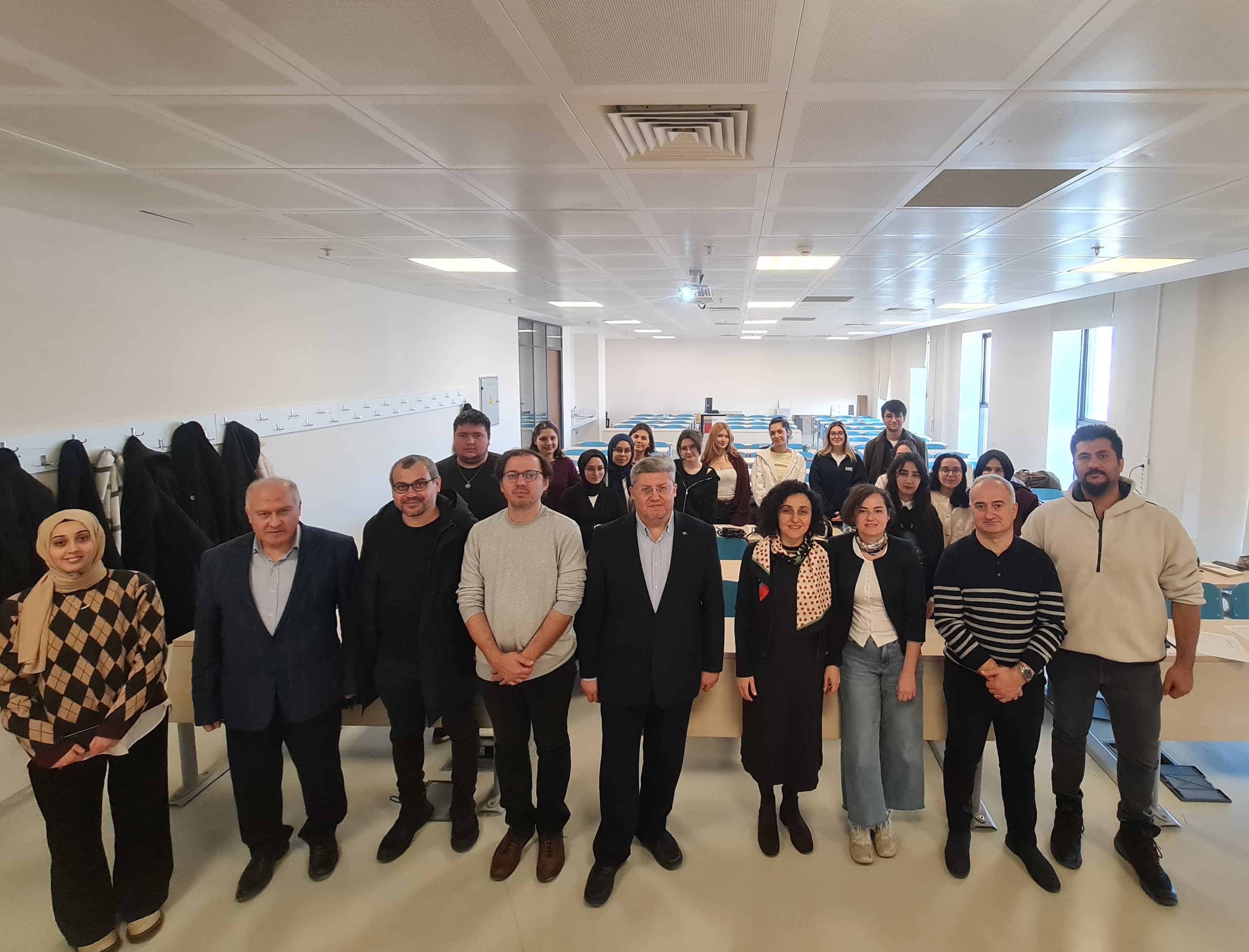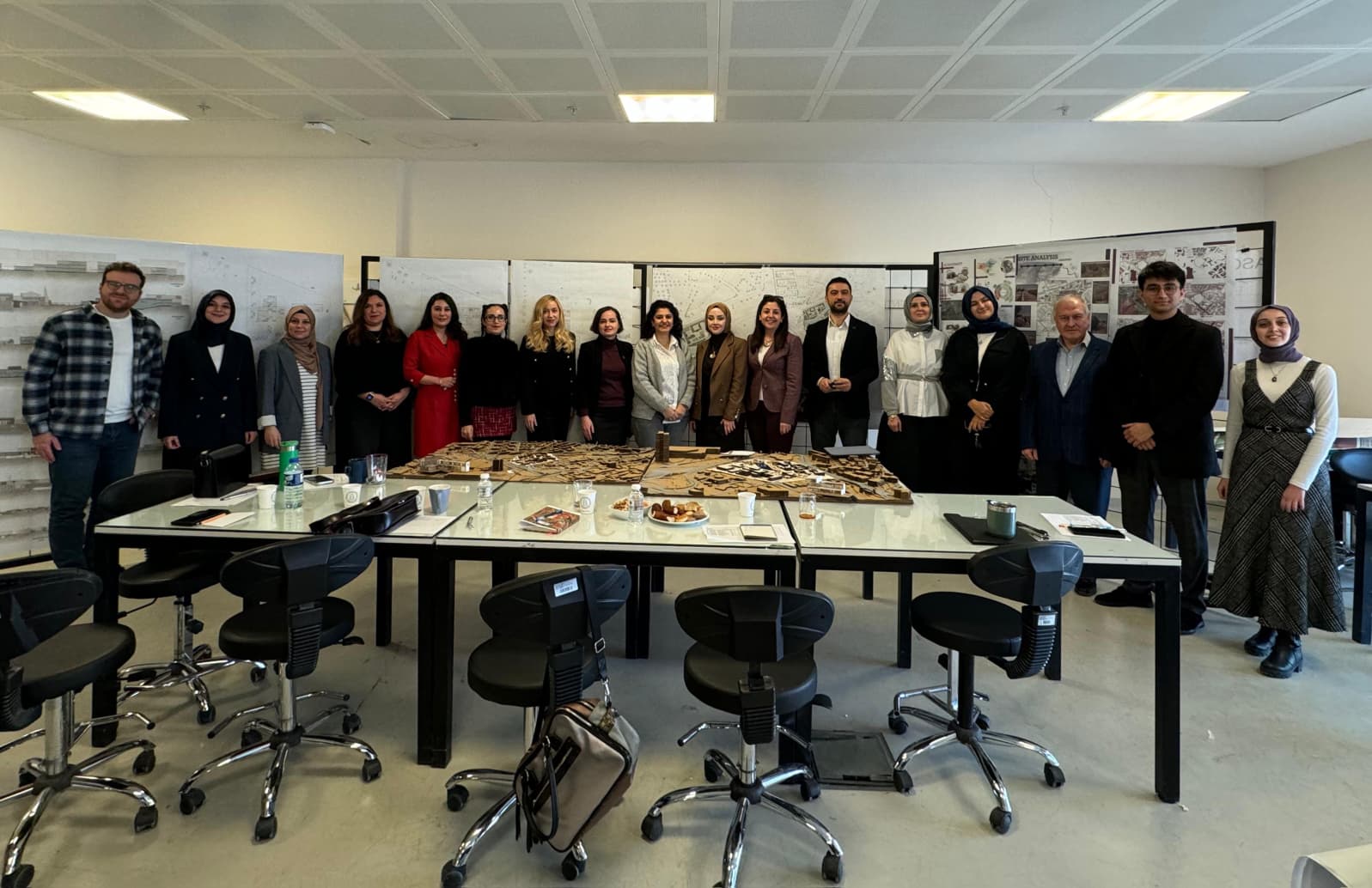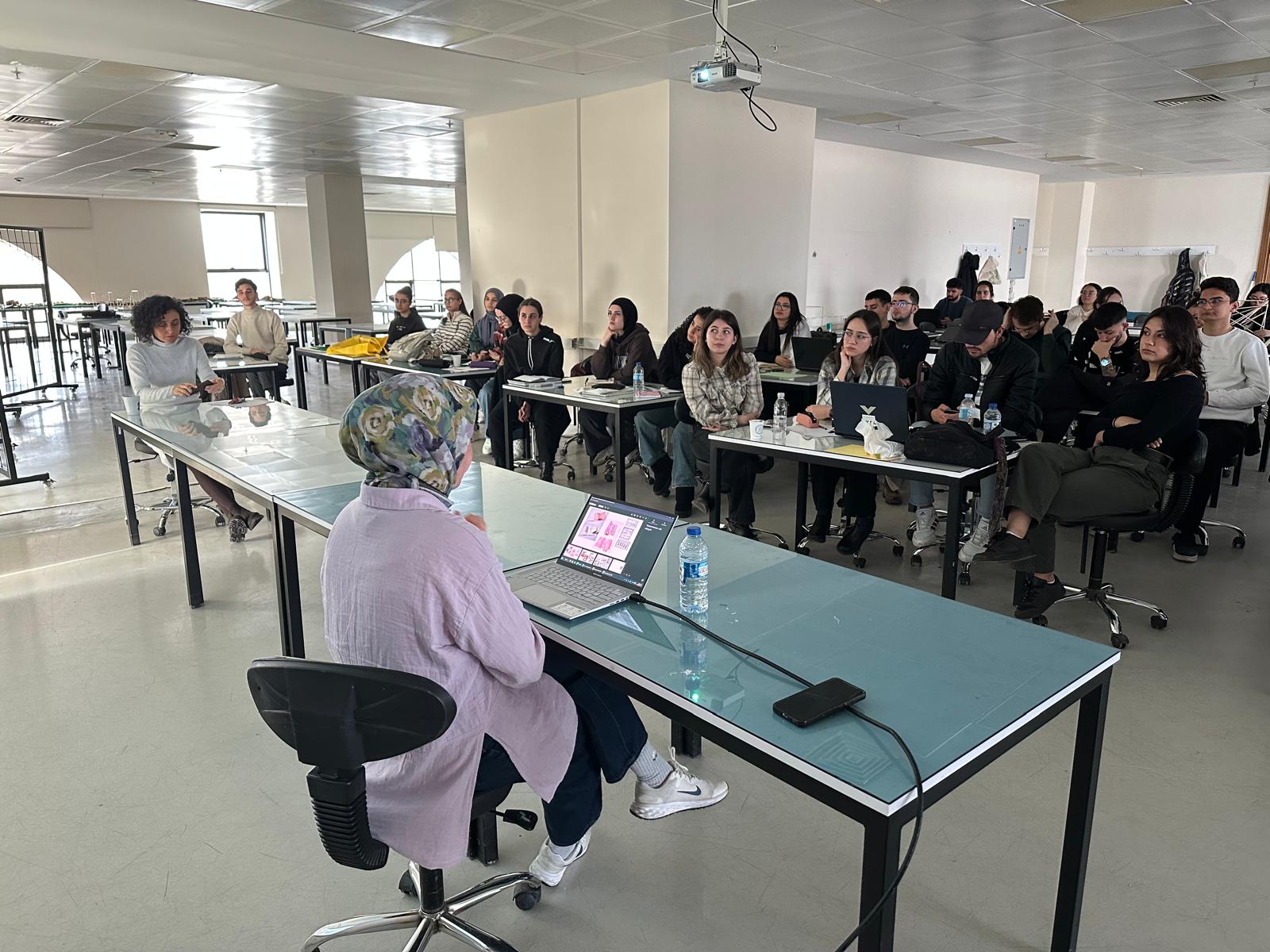

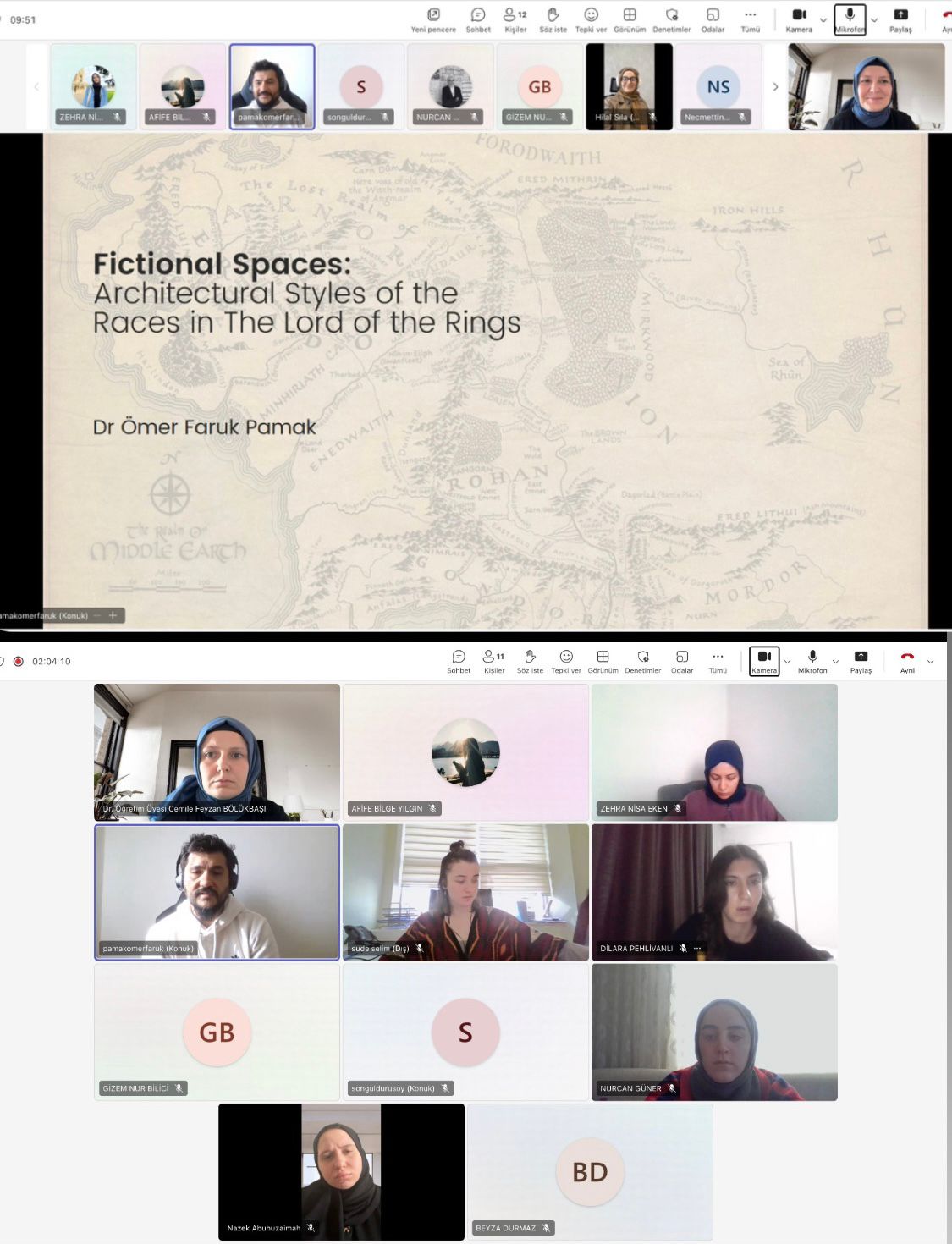
On November 11, 2025, Ankara Yıldırım Beyazıt University hosted a remarkable lecture titled “The Architecture of Middle-Earth: A Vision Beyond the Realms,” delivered by Guest Lecturer Dr. Ömer Faruk Pamak within the framework of the ARCH 531 – Fictional Spaces & AI in Architecture & City course, conducted by Dr. Cemile Feyzan Şimşek under the Graduate School of Natural and Applied Sciences, Architecture Master Program.
Dr. Pamak’s lecture offered a profound exploration of the architectural and philosophical dimensions of J.R.R. Tolkien’s The Lord of the Rings universe. The session was structured in three main parts, each illuminating a different layer of Tolkien’s imaginative world from an architectural and cinematic perspective.
In the first part, Dr. Pamak provided an insightful overview of J.R.R. Tolkien’s life, intellectual background, and creative works, emphasizing how his philological expertise and mythopoetic vision shaped the spatial and cultural logic of Middle-Earth. By tracing the author’s academic career and his fascination with languages and ancient mythologies, Dr. Pamak contextualized the deep-rooted cultural foundations that inspired the landscapes and civilizations of Tolkien’s fictional realm.
The second part shifted focus to the cinematic interpretation of Middle-Earth, analyzing the directorial vision of Peter Jackson and the filming techniques that brought Tolkien’s architectural imagination to life. Through examples from The Fellowship of the Ring, The Two Towers, and The Return of the King, Dr. Pamak discussed how visual composition, lighting, and spatial framing in the film trilogy enhanced the mythic depth and aesthetic coherence of Middle-Earth’s settings.
Finally, in the third and most visually engaging segment, the lecture examined the settlements and architectural typologies of Middle-Earth, from the pastoral design of the Shire to the monumental structures of Minas Tirith and the ethereal architecture of Rivendell. Dr. Pamak highlighted how each built environment reflects distinct social, moral, and cosmological principles—revealing a sophisticated understanding of form, symbolism, and material culture that resonates with real-world architectural theory.
The lecture concluded with a reflection on how fictional architecture—when viewed through the lens of myth, film, and digital imagination—can expand the boundaries of architectural thought and design education. Students and faculty alike praised the session for its interdisciplinary depth and its inspiring synthesis of literature, cinema, and architectural theory.