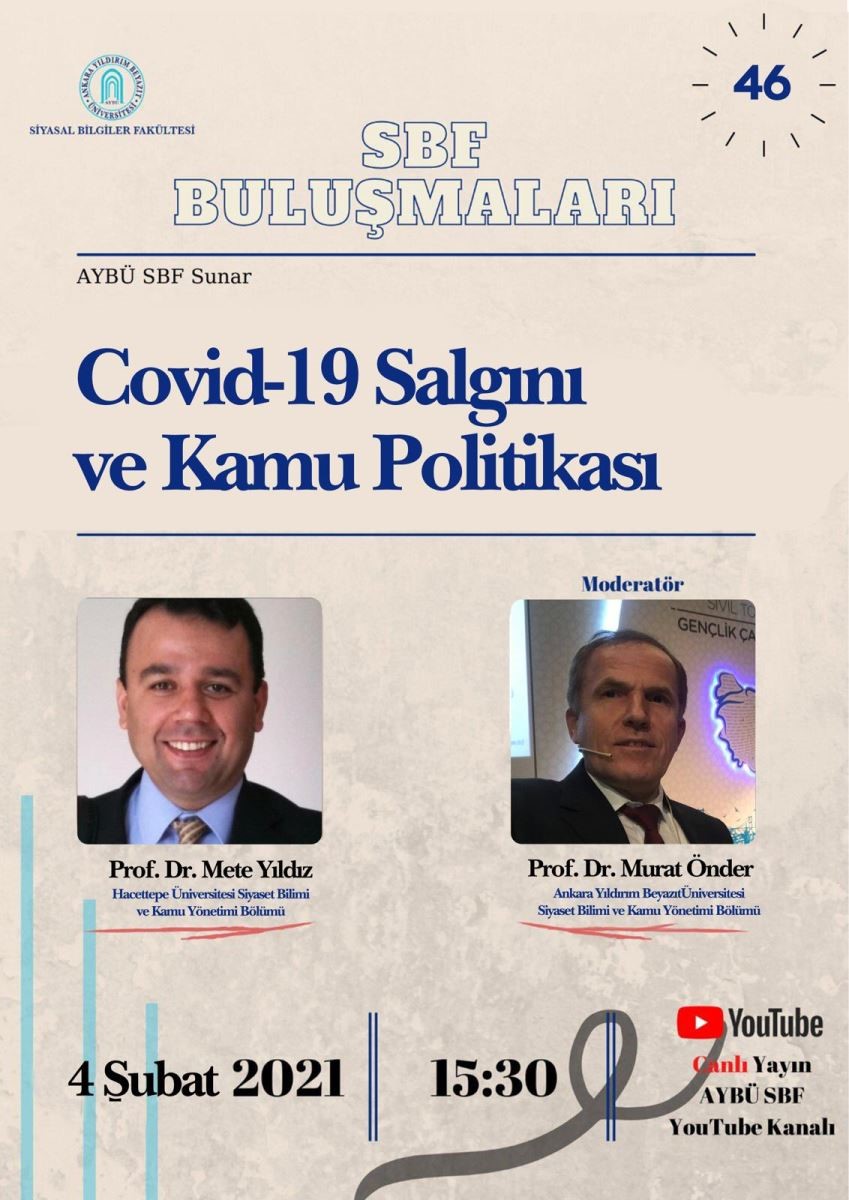
SBF Buluşmaları 46 Covid-19 Salgını ve Kamu Politikası Programımız Gerçekleştirilmiştir.
11 Şubat 2021
46. SBF Buluşmaları: COVID-19 Salgını ve Kamu Politikası
Fakültemiz tarafından düzenlenen geleneksel SBF buluşmalarının 46'ncısı “COVID-19 Salgını ve Kamu Politikası” başlığıyla salgın koşulları sebebiyle dijital platformlar aracılığıyla 04.02.2021 tarihinde gerçekleşmiştir.
Programımız Ankara Yıldırım Beyazıt Üniversitesi Siyaset Bilimi ve Kamu Yönetimi Bölüm Başkanı Prof. Dr. Yılmaz Bingöl’ün açılış konuşmasıyla başlamıştır. Prof. Dr. Bingöl konuşmasında COVID-19 krizinin yönetiminde ve salgına yönelik kamu politikalarının uygulanmasında cumhurbaşkanlığı hükümet sisteminin rolüne dikkat çekmiştir.
Programın moderatörlüğünü yürüten Siyaset Bilimi ve Kamu Yönetimi Bölüm Başkan Yardımcısı Prof. Dr. Murat Önder, COVID-19 salgınının kamu politikasındaki dönüştürücü etkisini vurgulamıştır. Prof Önder, COVID-19 salgını ile mücadelede başarılı ve başarısız ülke örnekleri ve salgınla mücadele stratejilerine dikkat çekmiştir.
Programa davetli konuşmacı olarak katılan Prof. Dr. Mete Yıldız, COVID-19 küresel krizini kamu politikası ve devlet kapasitesi çerçevesinde değerlendirmiştir. Krizlerle kamu yönetimi arasındaki ilişkinin simbiyotik olduğuna dikkat çeken Prof. Dr. Yıldız, COVID-19 krizinin bilgi asimetrisine neden olduğunu vurgulamıştır. Prof. Dr. Yıldız, kriz dönemlerinde kamu politikası tasarımı ve politika uygulama sürecinin hızı ve başarısının devlet kapasitesi ile yakından ilişki olduğuna dikkat çekmiştir. Salgınla mücadelede başarılı ve başarısız ülke örneklerinden ve politika transferlerinden bahseden Prof. Dr. Yıldız, COVID-19 salgınının ülkelerdeki etkilerini karşılaştırmalı örneklerle açıklamıştır. Öte yandan COVID-19 ile mücadelede bilgi ve iletişim teknolojileri politikalarına dikkat çeken Prof. Dr. Önder ve Prof. Dr. Yıldız; yapay zekâ, nesnelerin interneti ve büyük veri gibi yeni nesil teknoloji ve iş yapma biçimlerinin kriz yönetimindeki etkin kullanımına ilişkin konulara değinmişlerdir. Ayrıca COVID-19 salgınının “dijital kontrol ve gözetim sistemlerini” artırdığına dikkat çekilmiştir. Programımızın soru cevap bölümünde ise aşılanma, salgın sonrası eğitim politikaları, salgının geleceği ve COVID-19 krizi ile birlikte devletin değişen rolünden bahsedilmiştir.
46th SBF Meetings: COVID-19 Epidemic and Public Policy
The 46th SBF meetings was held on 04.02.2021 through digital platforms with the title of "COVID-19 and Public Policy".
Our program was organized by Ankara Yıldırım Beyazıt University Head of Department of Political Science and Public Administration. The meeting started with the opening speech of Prof. Dr. Yılmaz Bingöl. In his speech, Prof. Dr. Bingöl drew attention to the role of the presidential government system in the management of the COVID-19 crisis and the implementation of public policies towards the epidemic.
Deputy Head of the Department of Political Science and Public Administration, Prof. Dr. Murat Önder emphasized the transformative impact of the COVID-19 outbreak on public policy. Prof. Dr. Önder mentioned the examples of successful and unsuccessful countries in combating the COVID-19 pandemic and strategies to fighting against the epidemic crises.
Prof. Dr. Mete Yıldız as the invited speaker of the meeting, mentioned the COVID-19 global crisis within the framework of public policy and state capacity. Noting that the relationship between crises and public administration is symbiotic, Prof. Dr. Yıldız emphasized that the COVID-19 crisis caused information asymmetry.
Furthermore, Prof. Dr. Yıldız drew attention to the fact that the speed and success of the public policy design and policy implementation process in times of crisis are closely related to the capacity of the government. Prof. Dr. Yıldız explained the effects of the COVID-19 crises in countries with comparative examples. On the other hand, our meeting drawing attention to information and communication technologies policies (ICT) in the fight against COVID-19 and effective use of new generation technologies such as artificial intelligence, internet of things and big data in crisis management. It was also pointed out that the COVID-19 epidemic has increased “digital control and surveillance systems”. In the question and answer part of our program, vaccination, post-epidemic education policies, the future of the epidemic and the changing role of the state along with the COVID-19 crisis were mentioned.