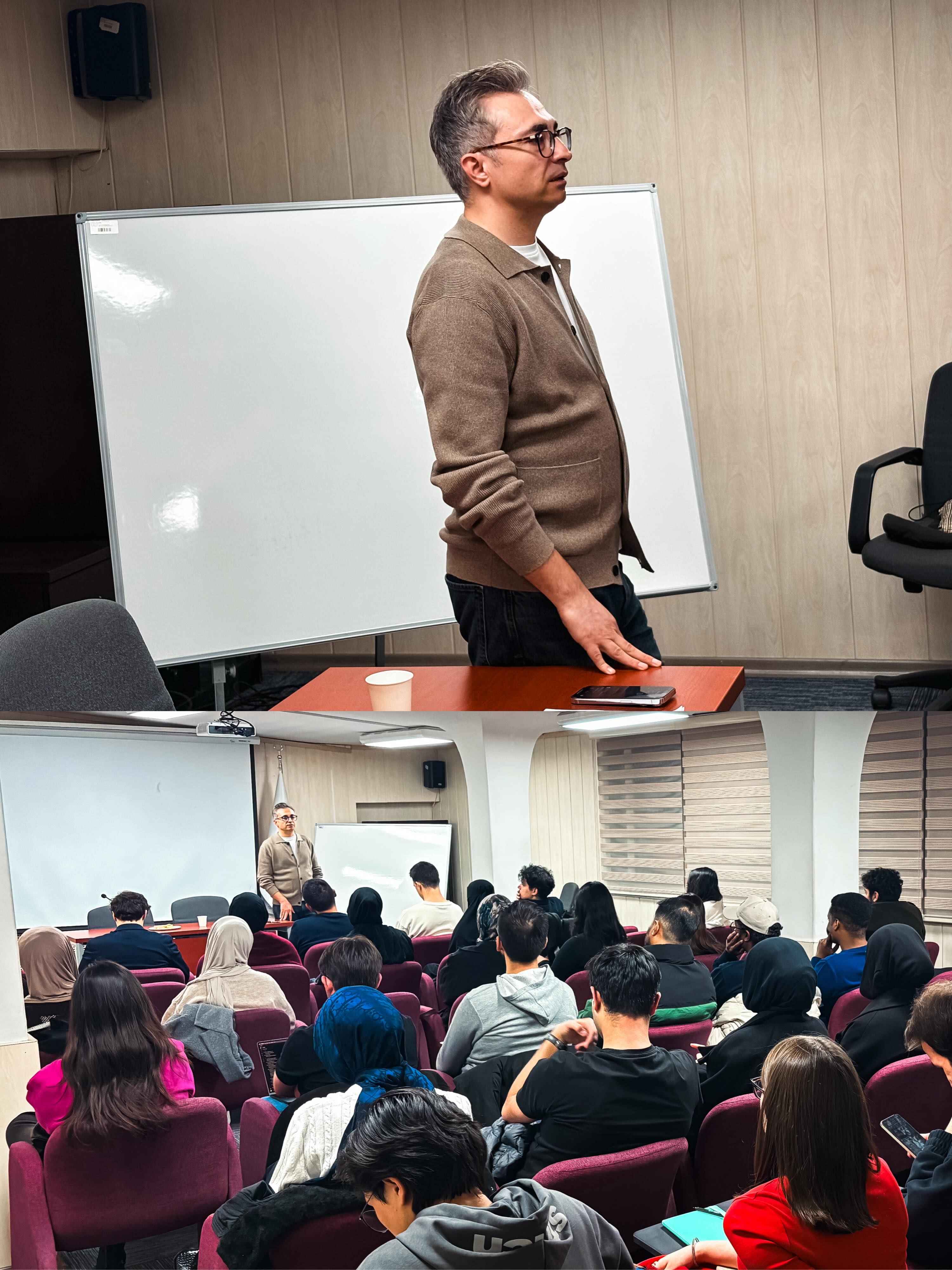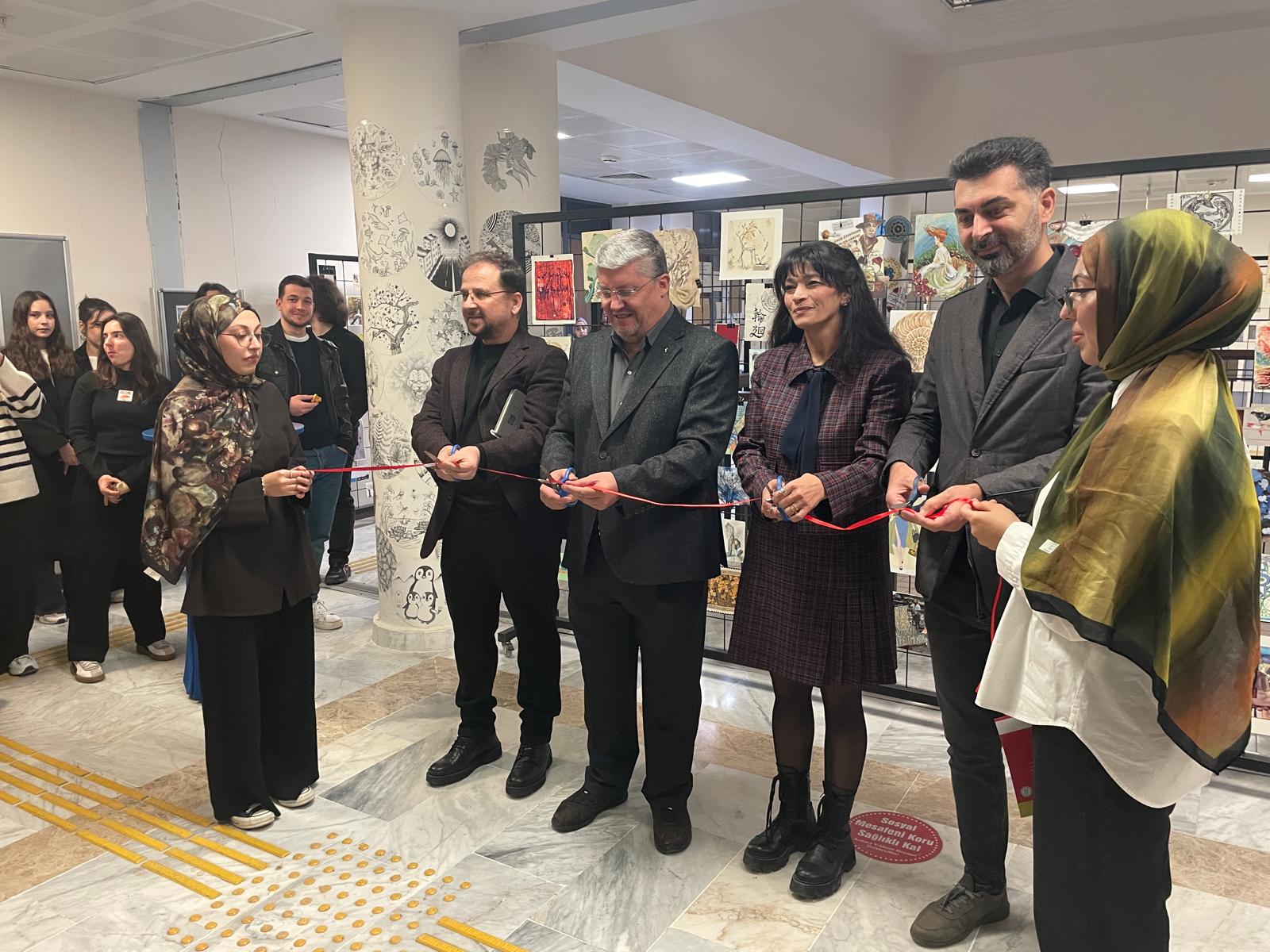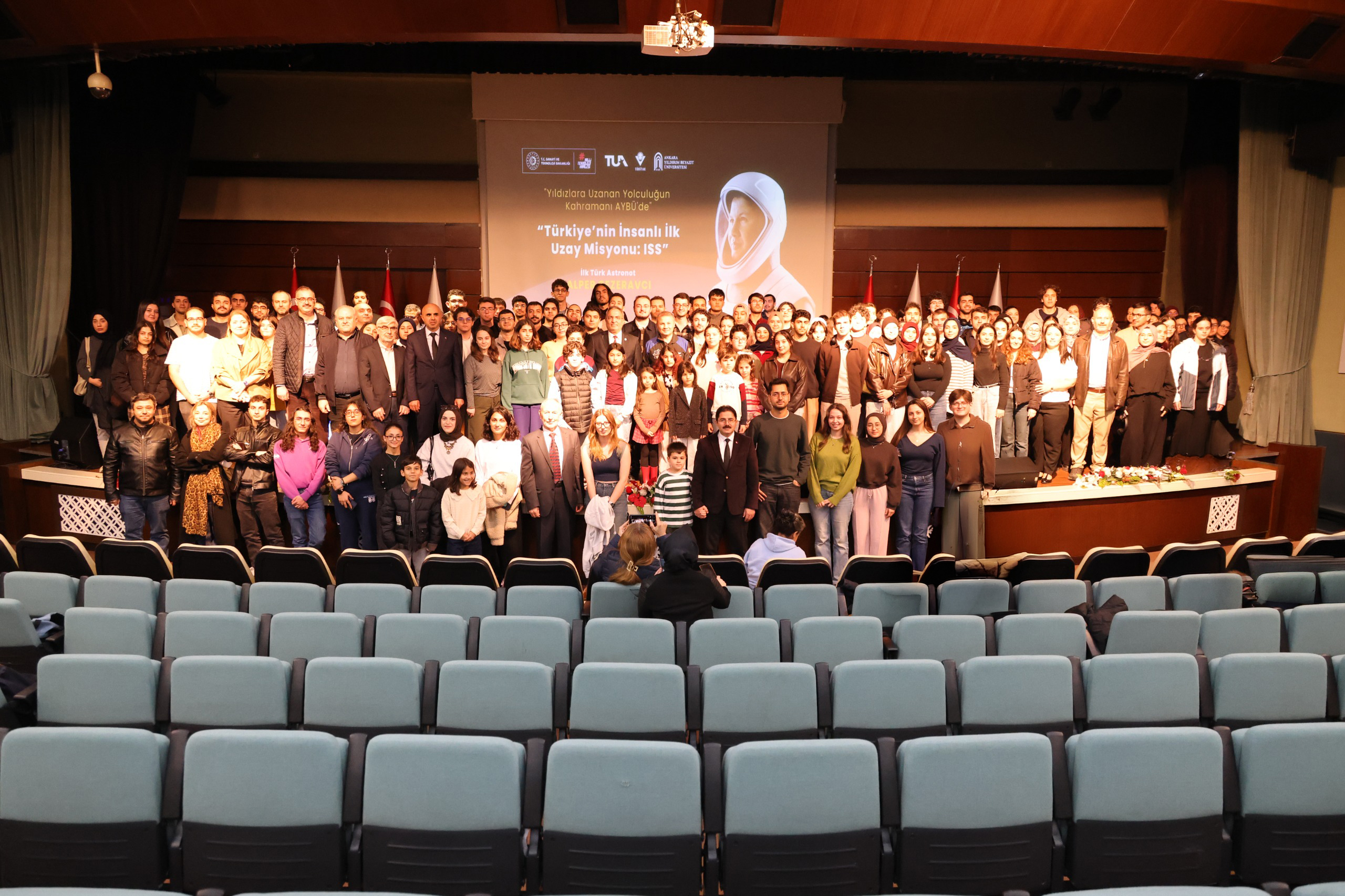

The "II. Student Symposium on the Manifestations of Islamic Urbanism from Past to Present (Political, Social, Cultural, Economic, Military, Religious, Art, and Architectural Dimensions)," organized by the Ankara Yıldırım Beyazıt University History Society, commenced today (March 11, 2020) at 10:00 AM.
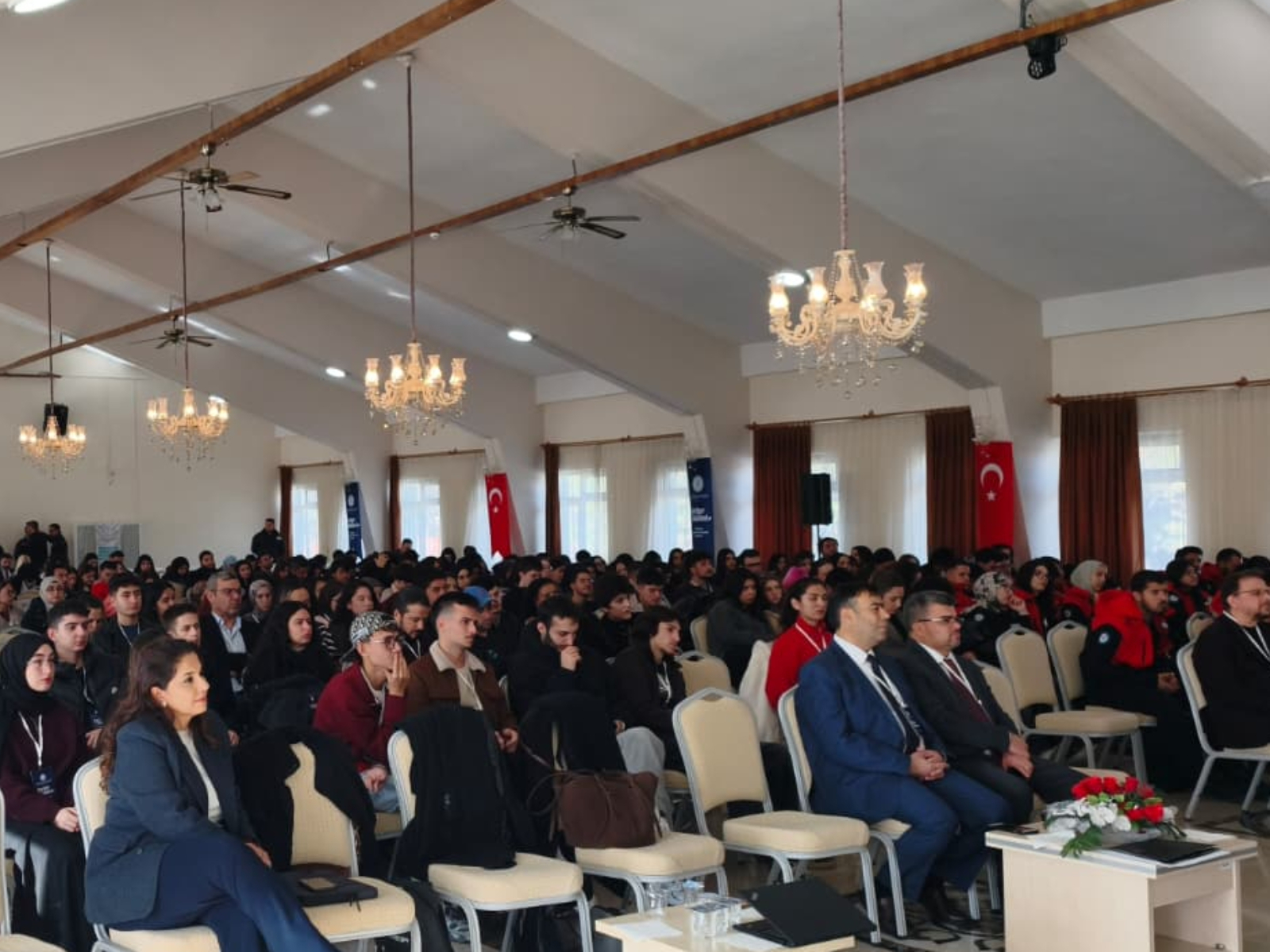
The symposium, held at the AYBÜ Esenboğa Campus A-Block Conference Hall, began with a Quran recitation by Abdurrahman Ayaz, Imam of the Millet Mosque. The event was attended by AYBÜ Rector Prof. Dr. İbrahim Aydınlı, Vice Rector and Dean of the Faculty of Humanities and Social Sciences Prof. Dr. Sait Okumuş, as well as academic staff and students.
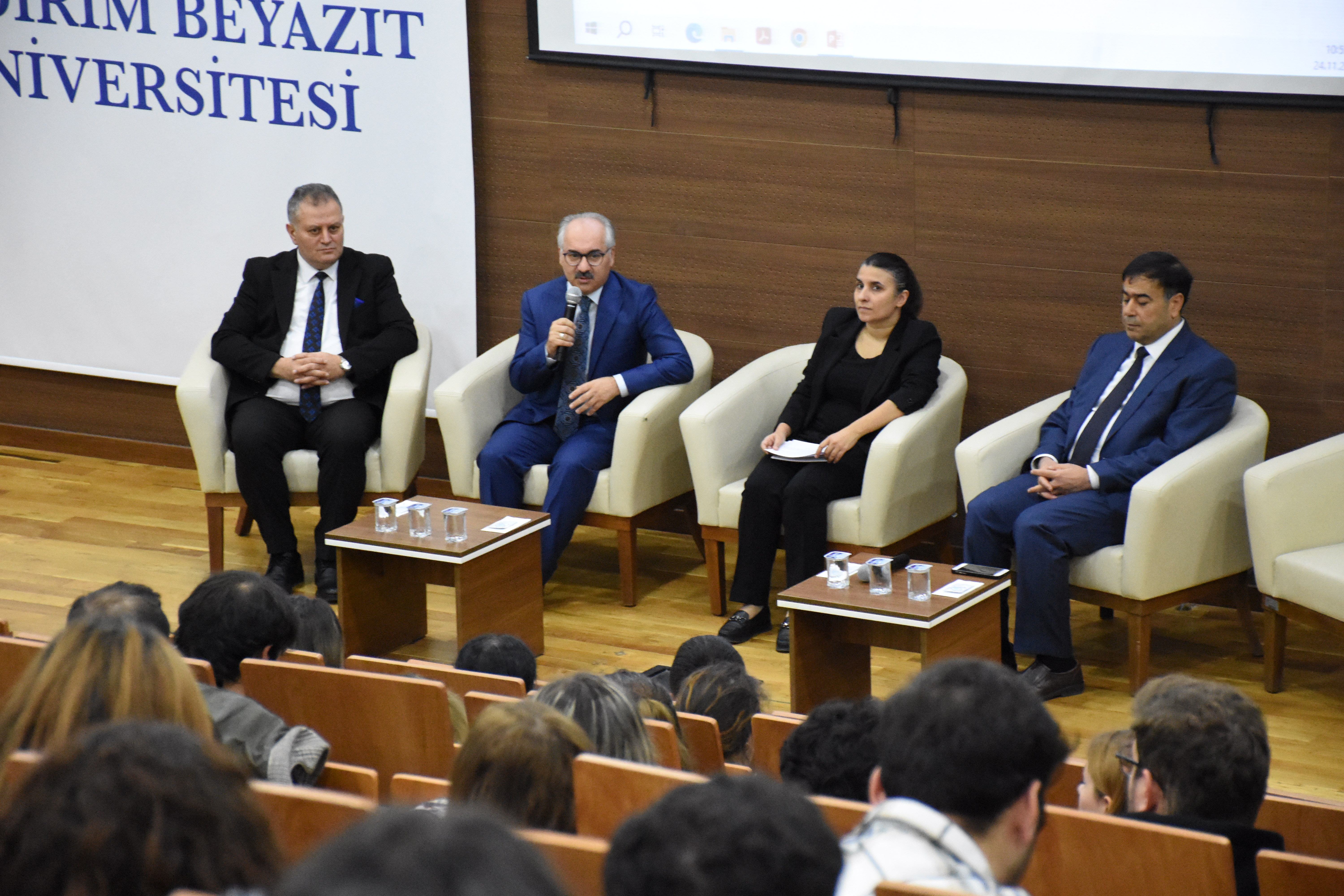
The opening addresses were delivered by AYBÜ Rector Prof. Dr. İbrahim Aydınlı, Head of the Department of History at the Faculty of Humanities and Social Sciences Prof. Dr. Rahman Ademi, and Faculty Member and Head of the Symposium Organizing Committee Prof. Dr. Fatih Erkoçoğlu.
In his speech, Rector Aydınlı stated, "Since the first day I took office as the Rector of Ankara Yıldırım Beyazıt University, I, along with my colleagues in the administration, our academic and administrative staff, and our students, have worked diligently and developed numerous projects to strengthen our university. In doing so, we have endeavored to create projects not only within the borders of our university but also for Ankara and, subsequently, for Turkey. In this regard, the 'North Ankara Urban Platform' constitutes one of our most significant projects. We held a meeting at our university with the mayors of the municipalities in the North Ankara region to discuss the planning and proper structuring of this region, which includes our campus, while remaining committed to our values. During the meeting, as we do in this symposium, we raised the questions: 'How should we reflect the spirit emerging from Islamic thought into architecture? What kind of city should this be? In what architectural structure or urban understanding should people live? In what architectural environment could people be happier?' We are striving to ensure that this project, planned under the leadership of AYBÜ and in partnership with the North Ankara Municipalities, serves as an exemplary model for Ankara, Turkey, and eventually the world, based on historical and cultural values. Currently, Uzbekistan and Bosnia and Herzegovina have achieved this in terms of architectural understanding and implementation. Especially in Uzbekistan, everything from houses to commercial buildings, mosques to madrasas, has been designed in harmony, forming parts of a whole. In this sense, we must first own and respect our historical values, structures, and architecture. If we do not value them ourselves, we cannot expect other nations to respect us, and we will remain under the hegemony of architectural structures built with a capitalist mindset. Because nothing that does not originate from your own geography and cannot be placed within it truly belongs to you. For it to be yours, you must build structures that arise from your own spirit and thought. Finally, I would like to emphasize this: to convey Islam and Islamic Civilization to the new generation, physical architecture must be preserved."
In his opening speech, Symposium Organizing Committee Chair Prof. Dr. Fatih Erkoçoğlu concluded by saying, "This year, at the 2nd edition of our symposium, which aims to discuss and interpret Islamic cities from multiple perspectives, share original viewpoints, and contribute to the field, 39 papers prepared by 77 students—45 from different universities and 32 from our own—will be presented. At this point, I would like to thank our valuable participants, the academics and students who took part in the symposium, the professors who provided support, our external stakeholders, our academic and administrative units, our Dean and Vice Rector Prof. Dr. Sait Okumuş, our Rector Prof. Dr. İbrahim Aydınlı, and you, our distinguished guests, for honoring us with your presence."
Prof. Dr. Rahman Ademi, Head of the Department of History at the AYBÜ Faculty of Humanities and Social Sciences, delivered a brief address on genocide and cities. Ademi emphasized the expression of "genocide/urbicide," a phenomenon felt more intensely in the Balkans, and stated that 90% of Ottoman cities in the Balkans had been destroyed.
The symposium will span two days, consisting of a total of 8 sessions: 4 sessions on Wednesday, March 11, and 4 sessions on Thursday, March 12. During the event, where scholars from various countries will speak, 39 scientific papers addressing Islamic Urbanism through its political, social, cultural, economic, military, religious, artistic, and architectural dimensions will be presented. The symposium will conclude on Thursday, March 12, at 17:00 at the Esenboğa Campus Milli İrade A Hall, following an evaluation session conducted by Prof. Dr. Hacı Mustafa Eravcı, Prof. Dr. Mustafa Özkan, Assoc. Prof. Dr. Hasan Işık, and Dr. Fatih Özkan.