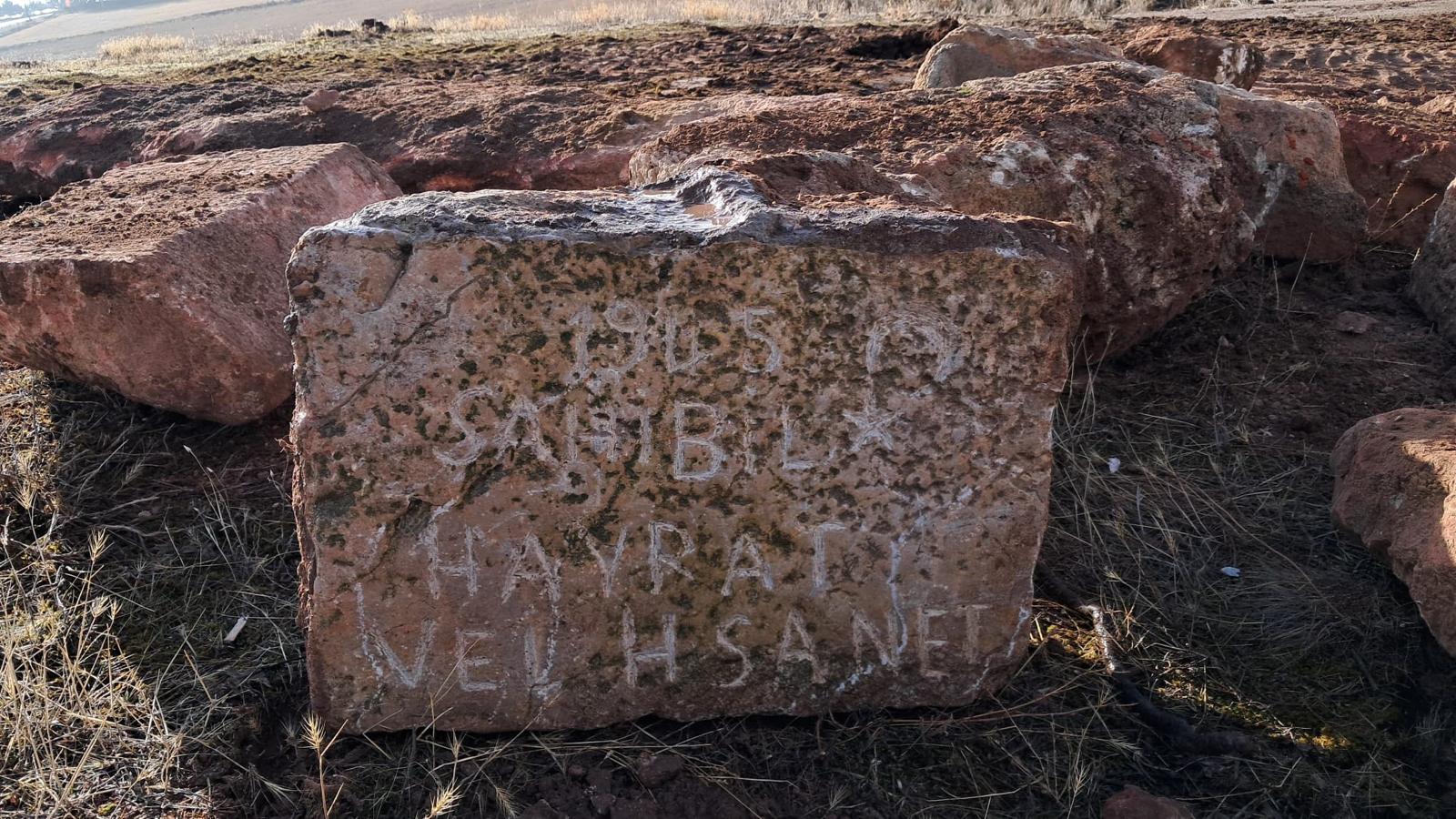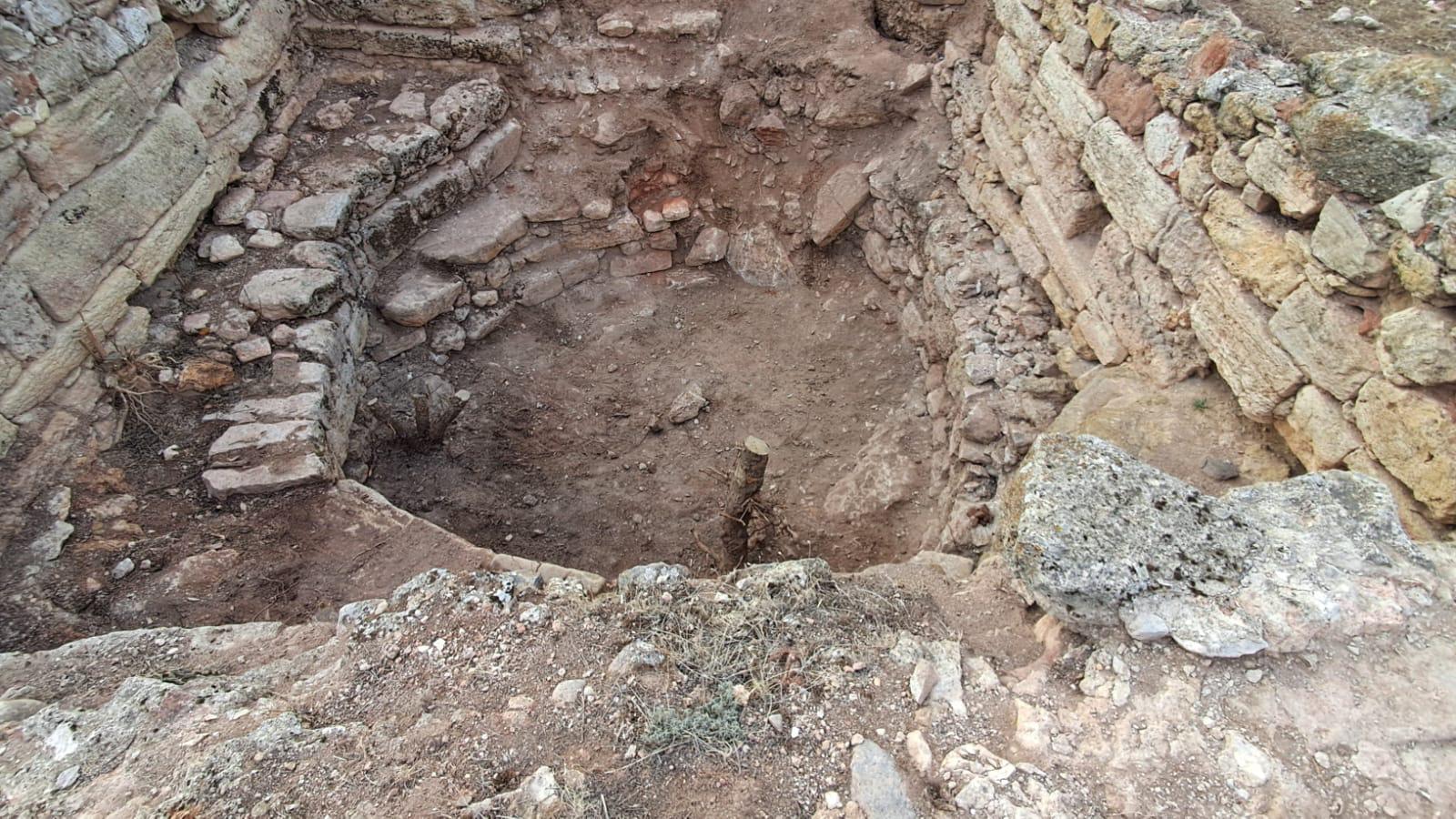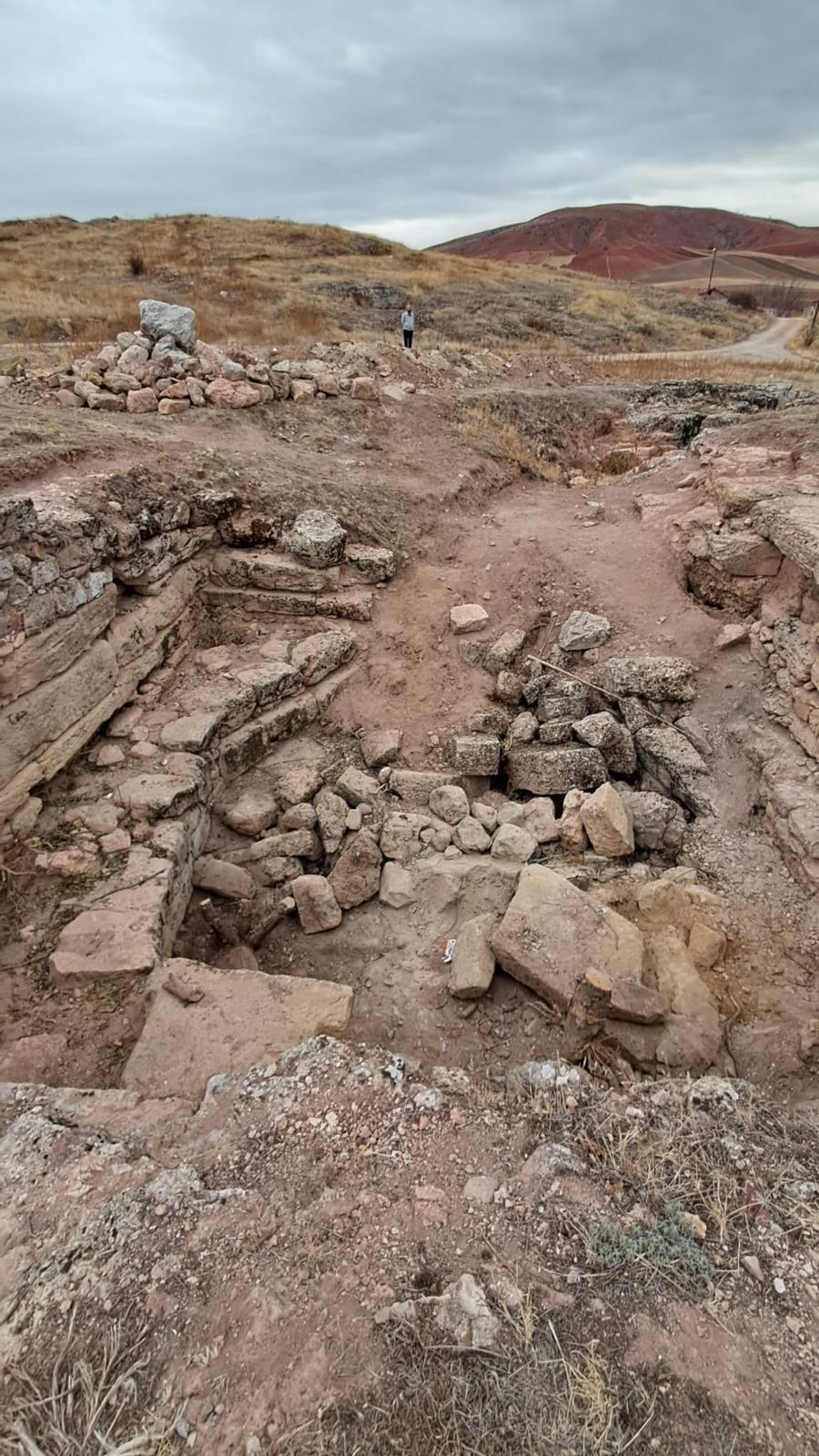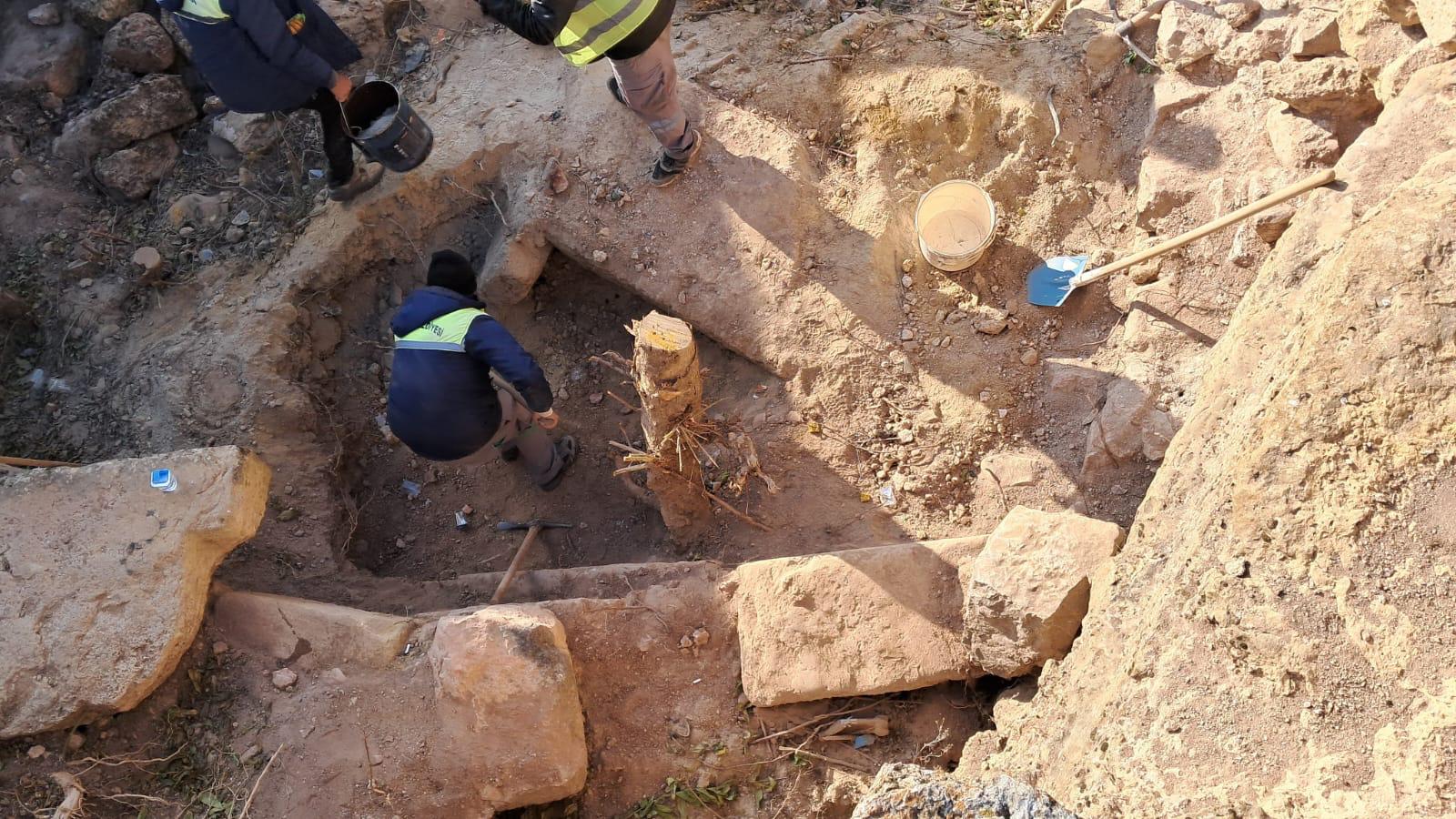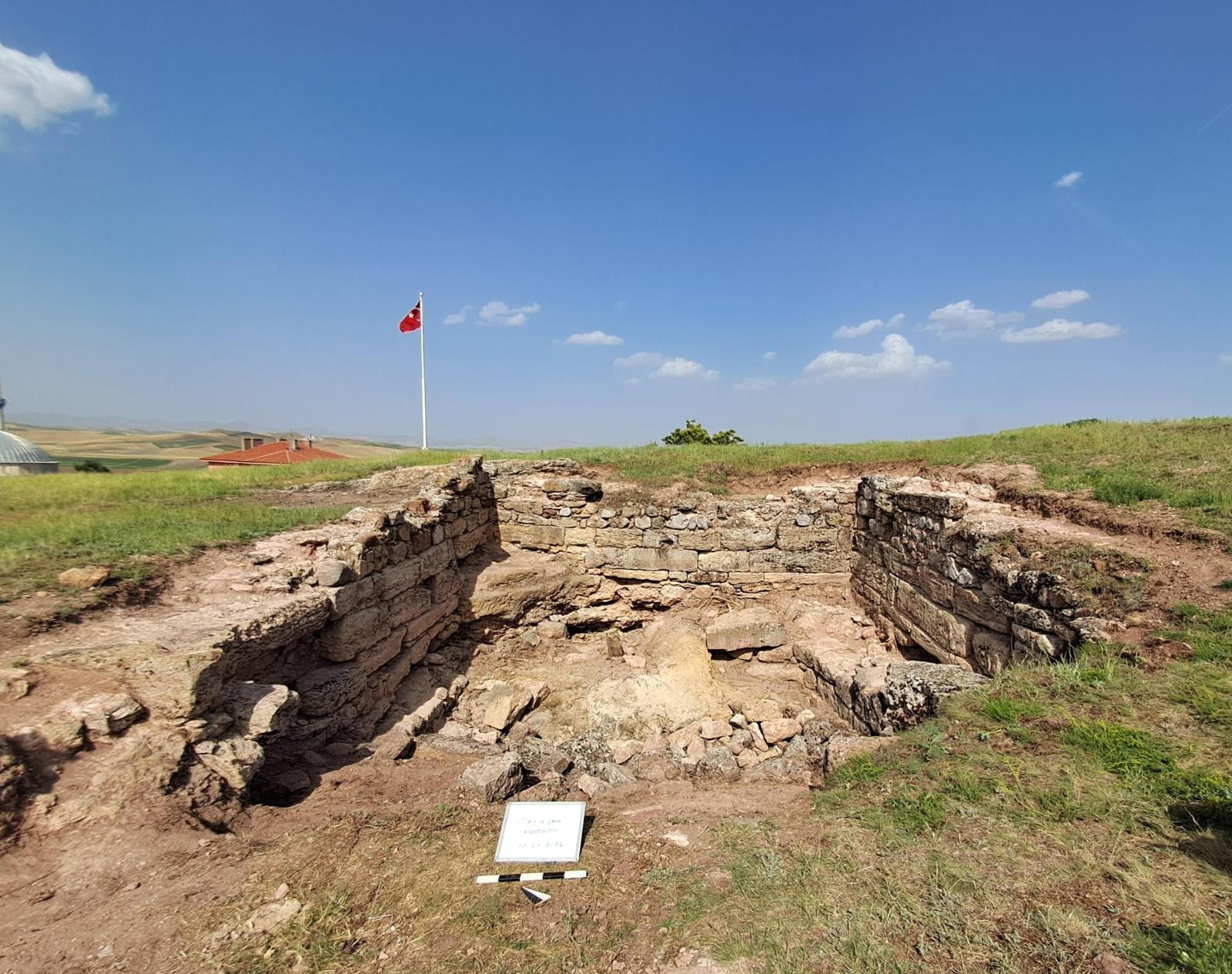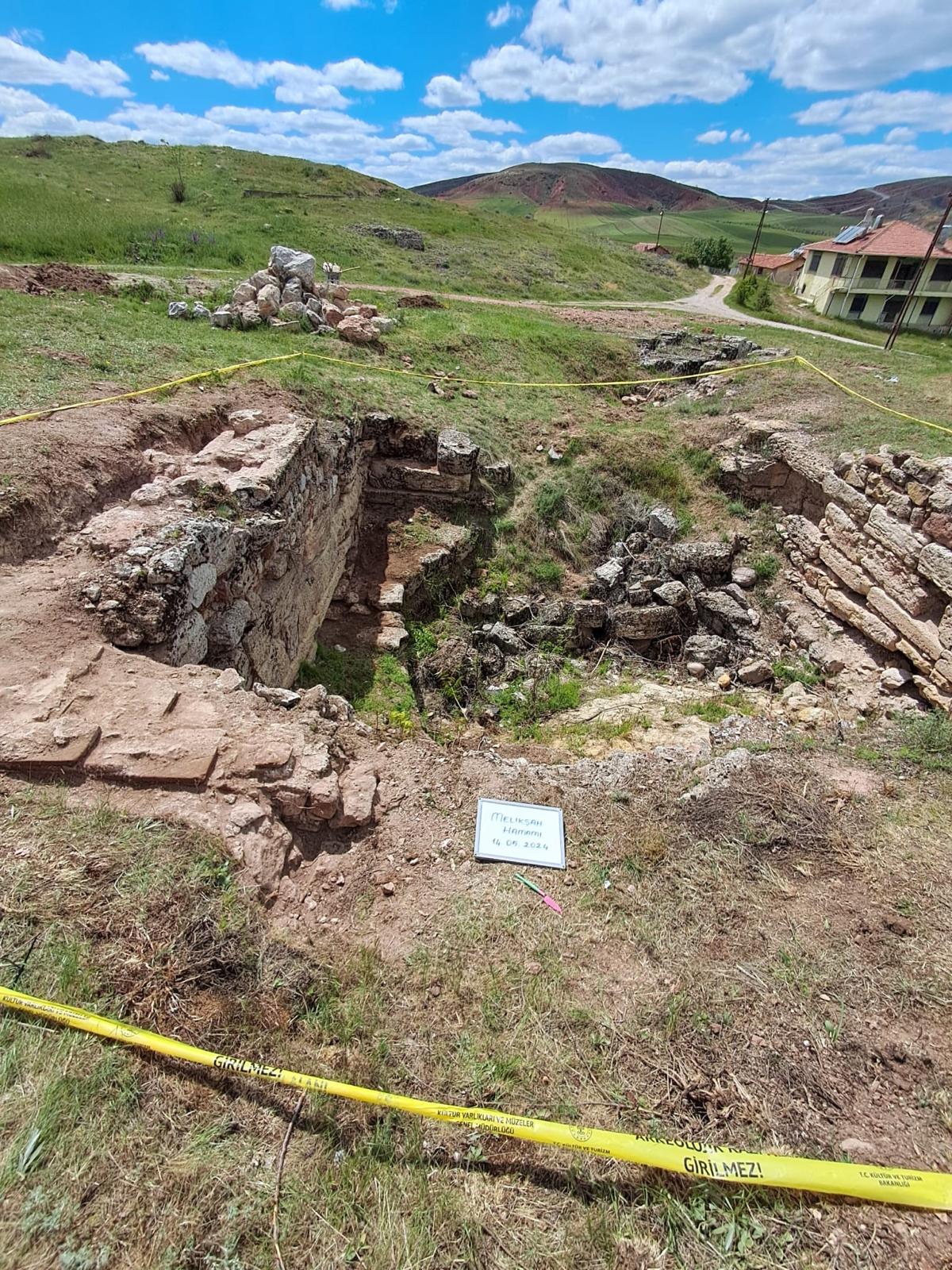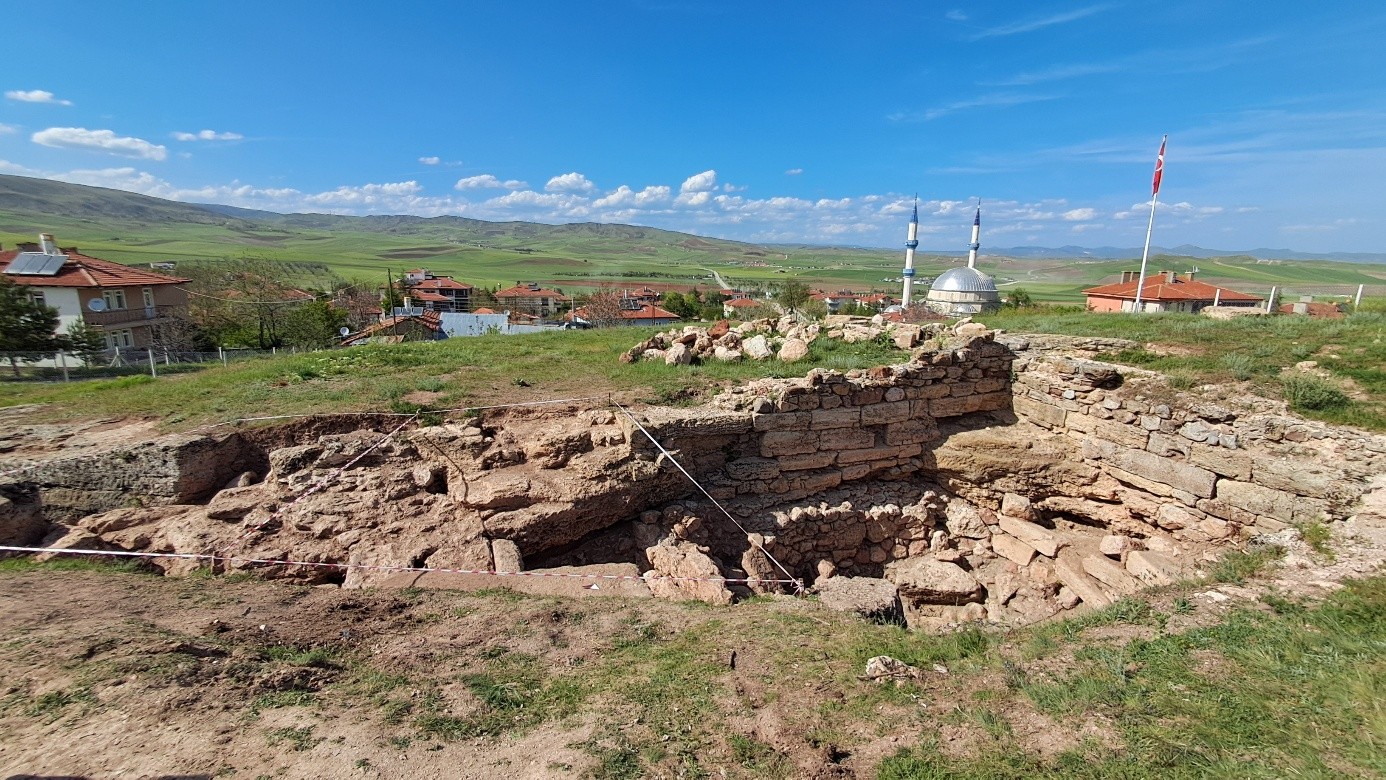


Excavations conducted under the scientific supervision of Ankara Yıldırım Beyazıt University have unearthed the historical fabric of a Roman-era hot spring bath in Melikşah Village, near Ankara's Esenboğa Campus. Archaeological work, initiated in 2024 with the support of the Anatolian Civilizations Museum, continued uninterrupted into 2025. Archaeological findings indicate that the bath, surrounded on three sides by bedrock, was built during the Roman period and was subsequently used continuously during the Byzantine and Ottoman periods. The bath stands out with its hexagonal pool and connected water drainage channels. Walls constructed with large stone blocks were built around the structure.
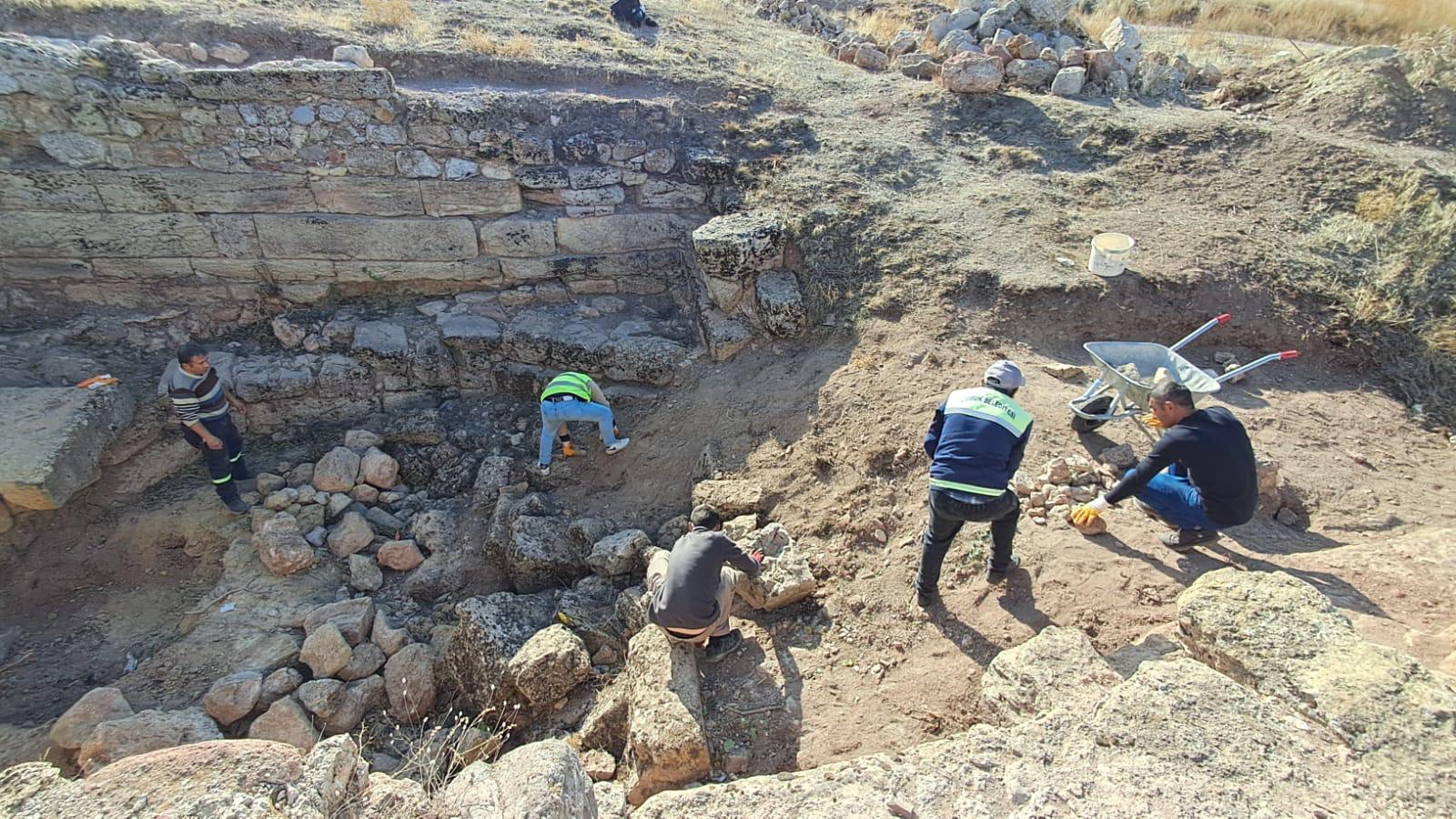
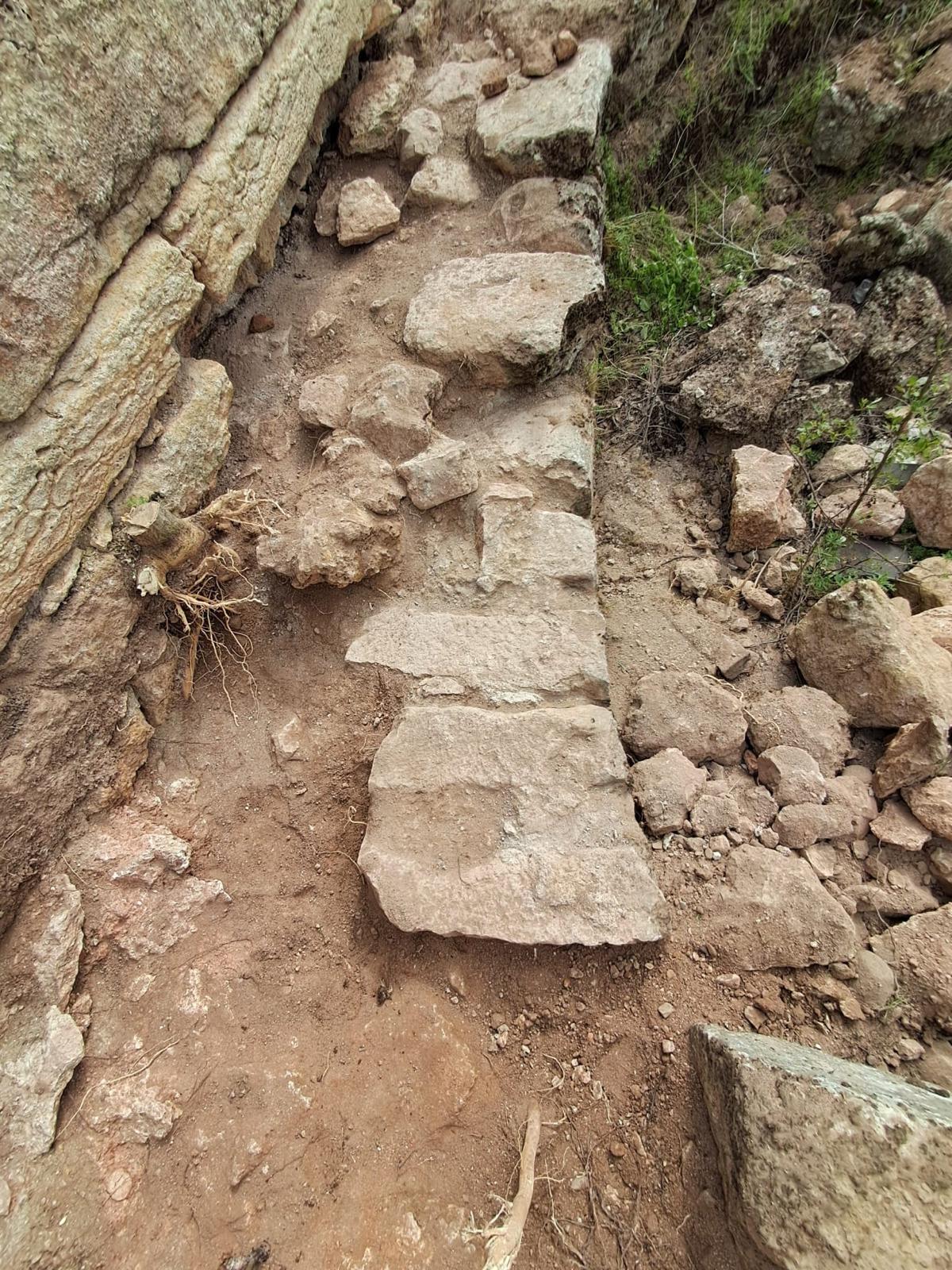
Actively used by the residents of Melikşah until 1974, the bath was abandoned when the hot water was diverted to another location, and over time, it became filled with soil and large rocks. The collapse of the entrance walls revealed that the pool had been filled, leaving the drainage channels buried underground. As a result of work carried out in 2024 and 2025, the fill in the pool area was completely removed and cleared down to the ground. The closed and open channels that provided water drainage were also excavated, revealing the structure in its final state.
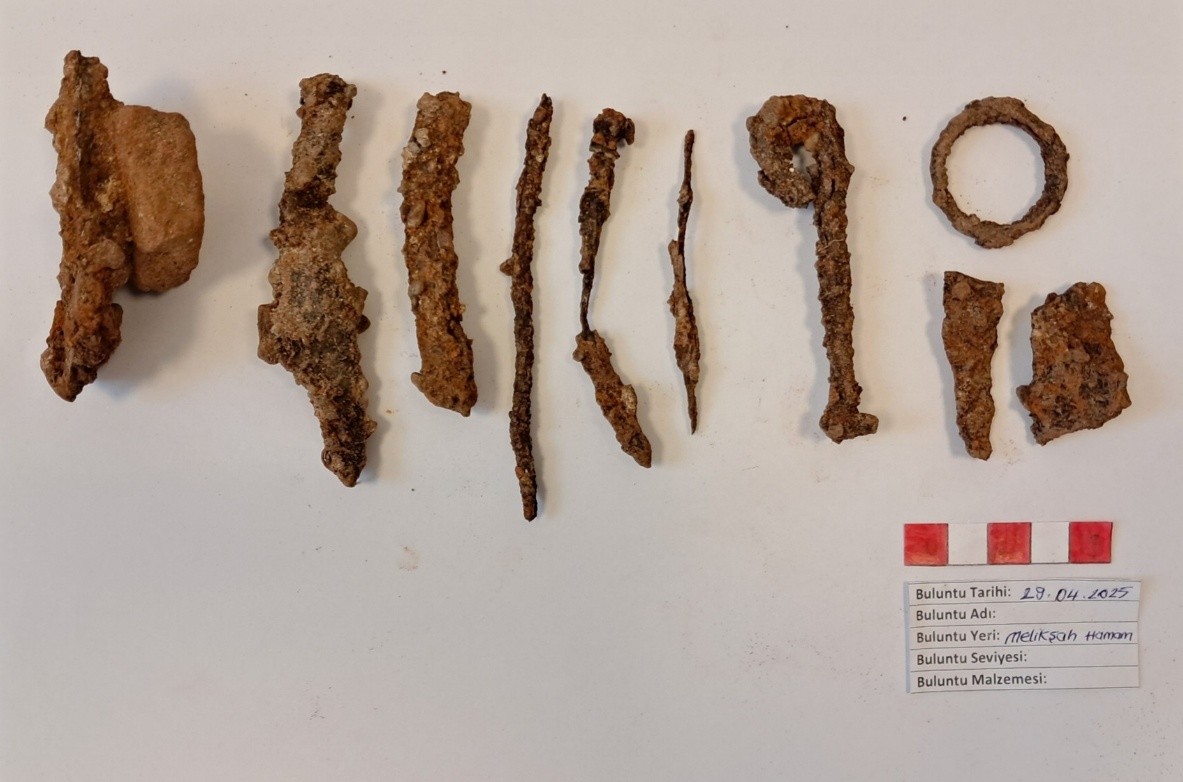
Assoc. Prof. Dr. Yusuf Albayrak, a faculty member in the Department of Art History at the Faculty of Humanities and Social Sciences at Ankara Yıldırım Beyazıt University, assumed scientific responsibility for the excavations. The team, led by Albayrak, stated that excavations around the structure would continue, and the restoration process would bring the bathhouse closer to its original state. The finds revealed a periodic continuity. Archaeological finds unearthed during the excavations document that the bathhouse was used not only in the Roman, but also in the Byzantine and Ottoman periods. This reveals the structure's multilayered history, increasing its significance as a cultural heritage asset for the region.