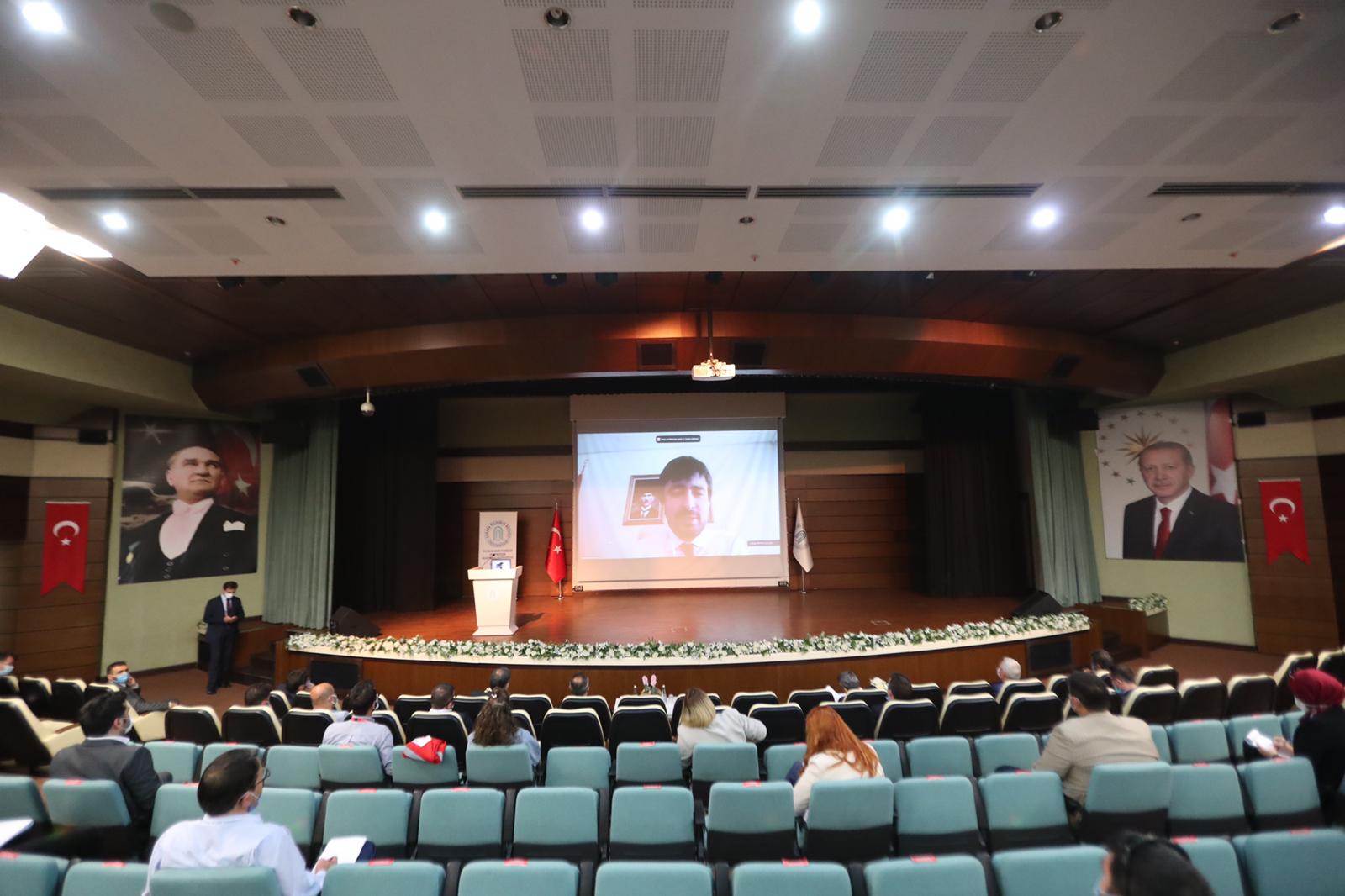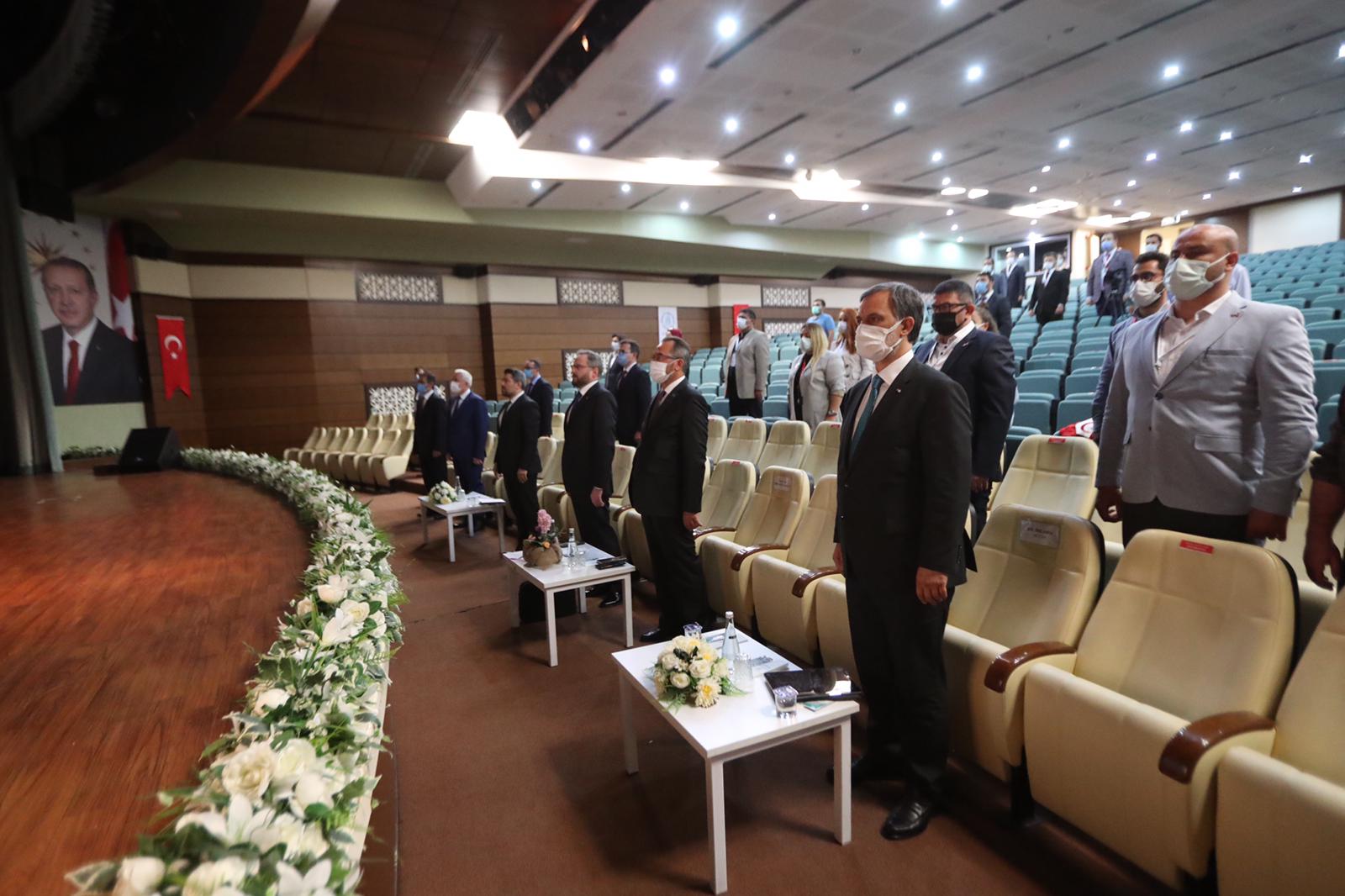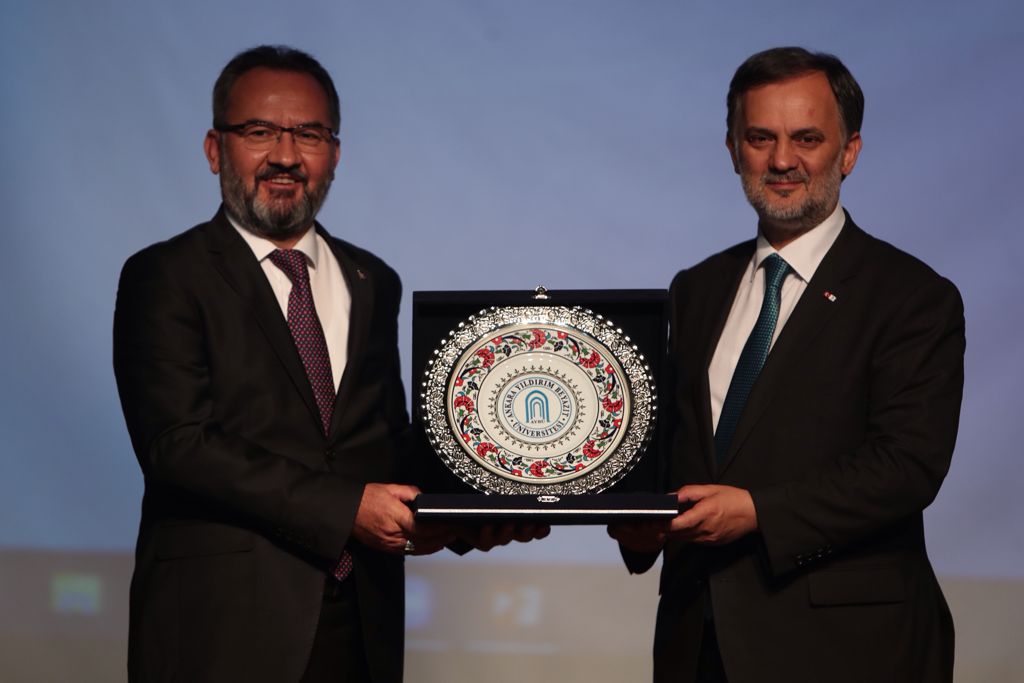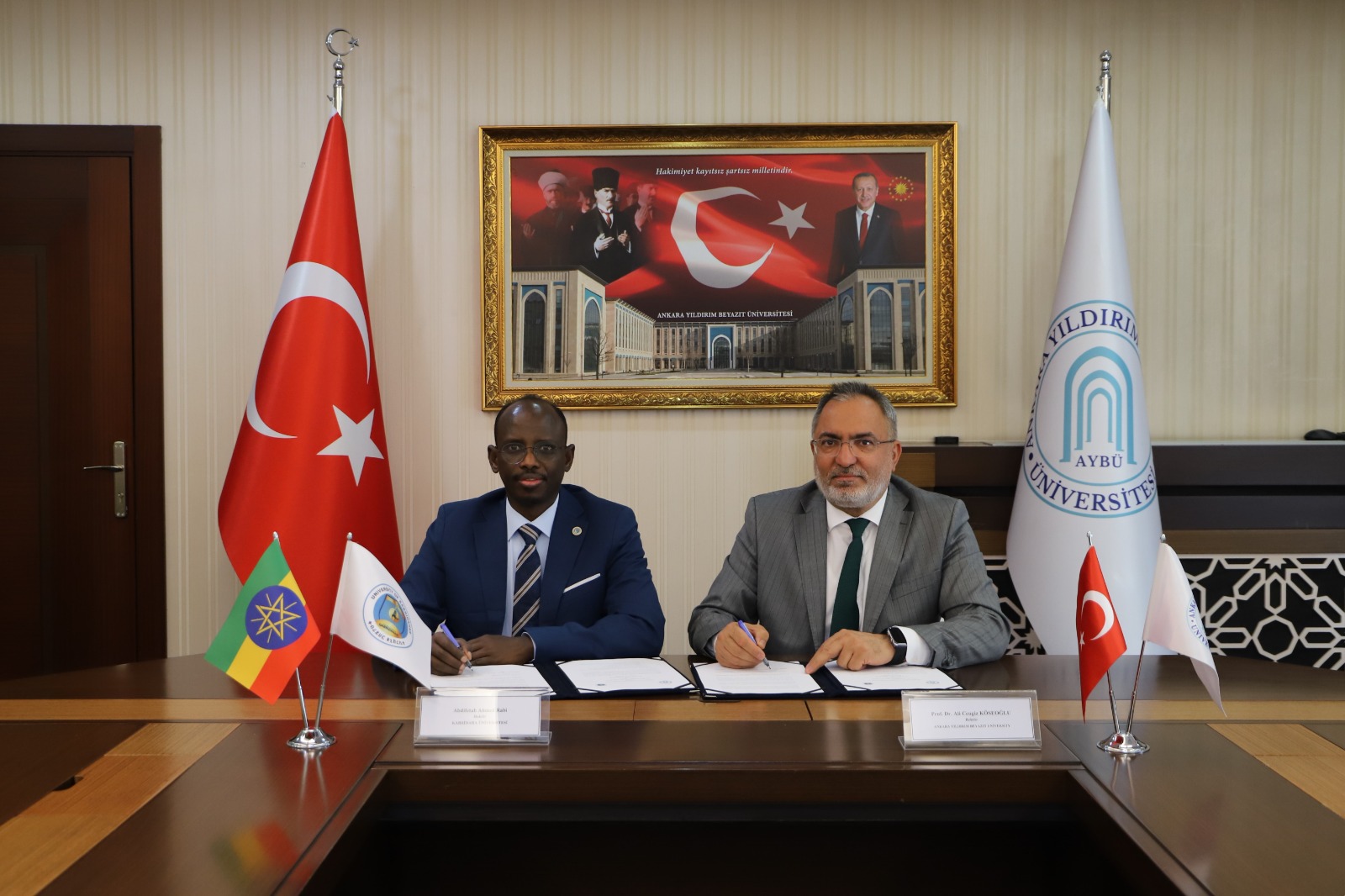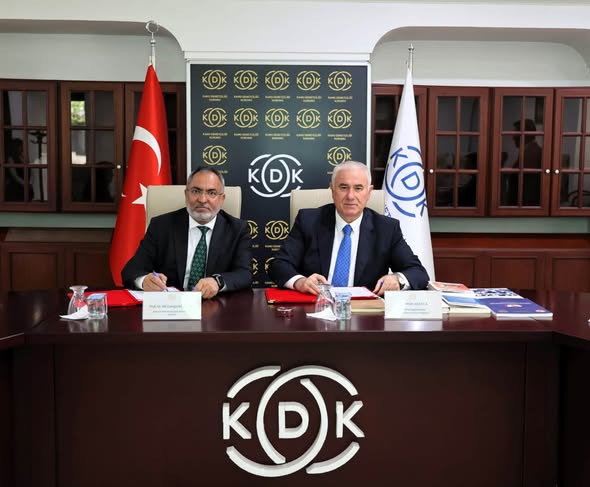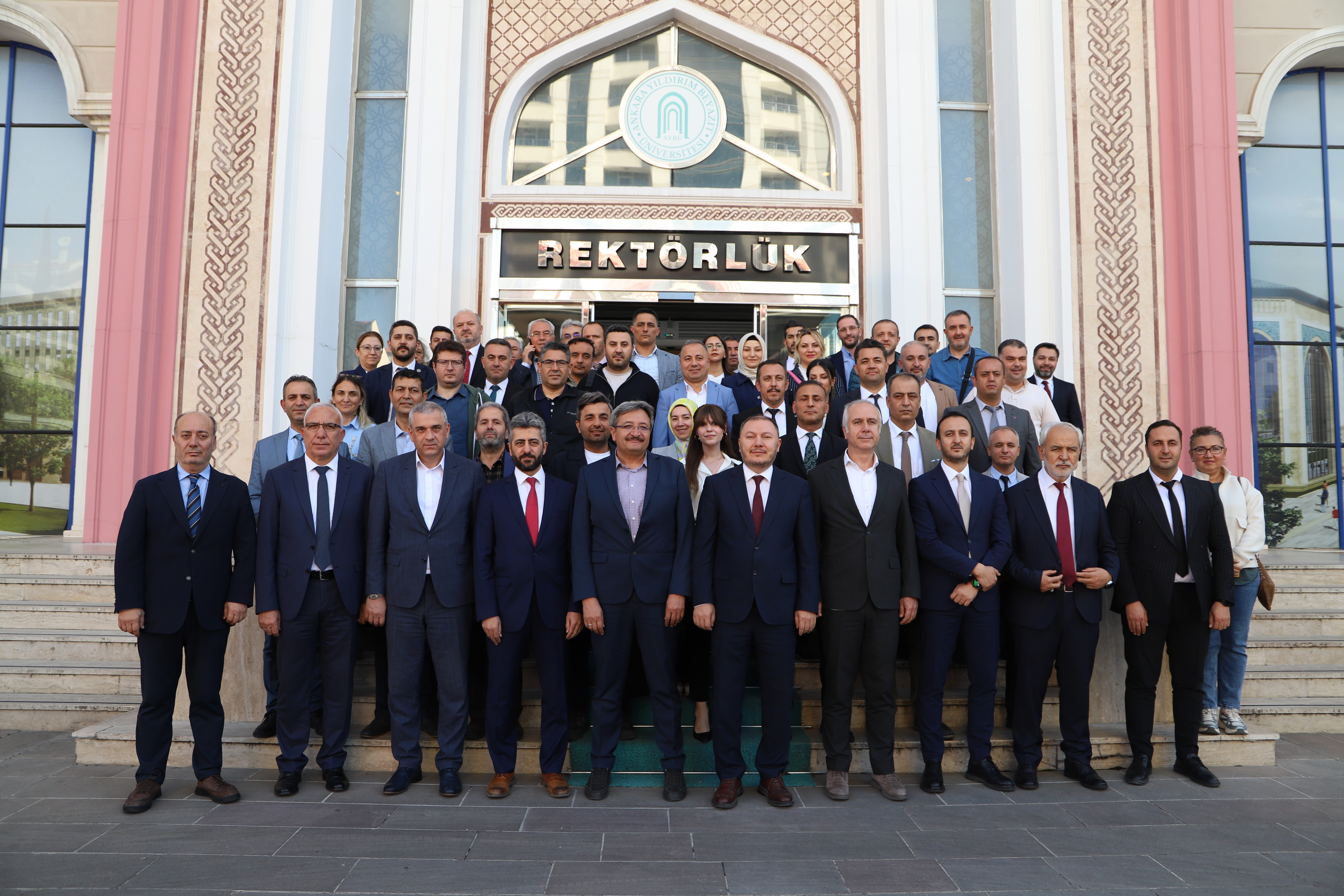

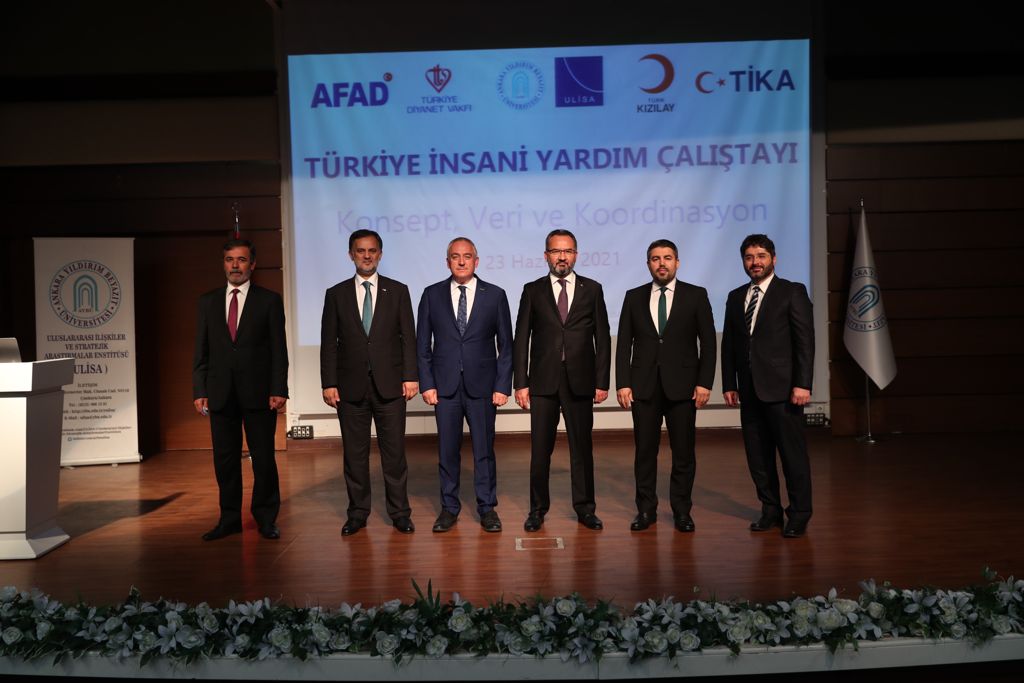
“A workshop on Humanistic Aid in Turkey” was held under the leadership of Ankara Yıldırım Beyazıt University International Relations and Strategic Researches Institute; fellowship of Turkish Red Crescent Association and Turkish Religious Foundation and with the participation of Turkish Cooperation and Coordination Agency, Prime Minister's Disaster Relief Agency (TIKA).
The opening speeches of the morning session of the workshop were delivered by AYBU Rector Prof. Dr. İbrahim Aydınlı and Director of AYBU International Relations and Strategic Researches Assoc. Dr. İbrahim Demir. During his speech, Rector Prof. Dr. İbrahim Aydınlı pointed out the significance of handling humanistic aid academically and the need to open related academic programs at the universities. During his speech, Assoc. Dr. İbrahim Demir referred to the fact that Turkey carried out humanistic aid that costs 8 million dollars in the year 2020 and added that Turkey ranks at the top in humanistic aid in the world. He also pointed out the need for the coordination, data analysis and scientific publication in aid activities.
The morning session continued with the speeches of General Director of Turkish Red Crescent Association Dr. İbrahim Altan, Deputy Head of Turkish Religious Foundation Assoc. Dr. Selim Argun, Deputy Head of Turkish Cooperation and Coordination Agency (TIKA), Dr. Naci Yorulmaz, Deputy Head of Emergency Management Department of Prime Minister's Disaster Relief Agency (AFAD) İsmail Palakoğlu and online speeches of Ambassador of Turkish Republic in Tanzania Dr. Mehmet Güllüoğlu and Ambassador of Turkish Republic in Sudan Assoc. Dr. İrfan Neziroğlu. In his speech, General Director of Turkish Red Crescent Association Dr. İbrahim Altan said that “Thanks to the fact that flexibility is foregrounded in the practice of Turkish type development model, determination of long-term strategies becomes principal. Flexibility makes it possible to answer to the need in the time of emergency. Instead of development of strategies in detail there is a need to determine principles by determining the vision.” Deputy Head of Turkish Religious Foundation Assoc. Dr. Selim Argun said that “The coordination and synchronization are needed and in humanistic aid studies and added that partnership between public and non-governmental institutions should be enhanced.” He also referred top the fact that despite being included among G-7 countries, Turkey ranks at the top. He also advised to form a “Turkish Model” which is based on principles of transparency and equivalence in humanistic aid studies. He added that sustainability of coordination is possible with the collection and analysis of the experience of the institution. Deputy Head of Turkish Cooperation and Coordination Agency (TIKA), Dr. Naci Yorulmaz pointed out the significance of TIKA in the area of humanistic aid and humanistic and entrepreneur external policy of Turkey. He also emphasized the need to handle humanistic aid with a global vision. He said that in pandemic period in which it is understood that wellness is interdependent, global approach and its effective use are foregrounded. He said that academic studies and critical thinking are crucial in humanistic and pointed out the significance of the need to carry out these studies under the light of academy and experience of the market. Finally, he referred to the most significant problem in humanistic aid studies is approach to the cris rather than the budget. Deputy Head of Emergency Management Department of Prime Minister's Disaster Relief Agency (AFAD) İsmail Palakoğlu pointed out the existence of people in need in many parts of the world, especially after the year 2020. He added that in many countries such as Palestine, Yemen and Syria crises, especially humanistic crisis are experienced and pointed out development of cooperation with academy and other institutions. Ambassador of Turkish Republic in Tanzania Dr. Mehmet Güllüoğlu referred to the fact that possibilities of Turkey has developed in the line with economic development of within 20 years. He added that the crisis in Islamic world also has a role in the raise in humanistic aid activities of Turkey. He said that despite raising activities in this area, there is still not a written and repeatable model. He gave the popularised mobile payment system in Africa as an example and the need to search for the effects of cash support in the line with this. Additionally, he pointed out that international policy has a great role on the aids. Ambassador of Turkish Republic in Sudan Assoc. Dr. İrfan Neziroğlu said that in some places, Turkey is the first and only country that provides humanistic aid. He also referred to the importance of communication and cooperation and added that non-governmental institutions do not inform embassies concerning the activities they carry out. He said that the activities carried out by Turkish institutions could be followed up via an interactive map. He also pointed out that professional and technical sustainable support may be provided in humanistic aid activities and added that determination of trustworthy local partners is crucial in humanistic aids.
In the afternoon session, the workshop was held. In the frame of the workshop, a study was carried out under three titles such as “Determination and Development of the Concept in Humanistic Aid Studies”, “Data Sharing abd Analysis in Humanistic Aid Studies” and “Coordination in Humanistic Aid Studies.” In total 15 institutions that carry out national and international aid activities such as Turkish Religious Foundation, Turkish Red Crescent Association, Turkish Cooperation and Coordination Agency, Prime Minister's Disaster Relief Agency (TIKA), Prime Minister's Disaster Relief Agency (AFAD), Lifeblood Cooperation Association, Doctors Worldwide, Charity stone Association, Charity Humanistic Aid Association, Human Association, Solution Association, İHH Humanistic Aid Foundation, Lighthouse, International Immigration and Adaptation Association, Associations that Attach Importance to Humanity Federation (İDDEF) and Beşir Association contributed to the workshop with their staff. The workshop came to an end with the discussion and verification of the report. The conclusive report o of the workshop will be presented by AYBU International Relations and Strategic Researches Institute.